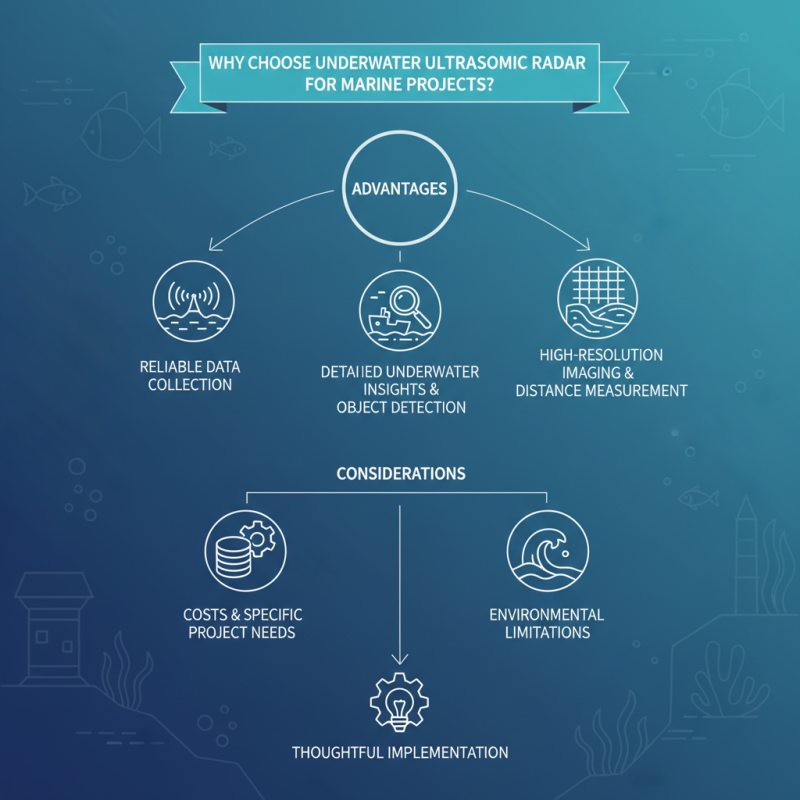
When it comes to marine projects, having reliable data collection and analysis is everything. The ocean’s environment can be pretty tricky to work with — it throws some unique challenges our way. Honestly, traditional methods often just don’t cut it in terms of accuracy or speed. That’s where Underwater Ultrasonic Radar really steps up.
This tech gives you a pretty detailed look at what's happening beneath the waves. It can produce high-res images and measure distances with ease. With it, operators can spot underwater objects, structures, and different types of terrain. That said, it’s worth noting that not every scenario is going to benefit equally. Some environments might still be a bit challenging to get perfect results.
Deciding whether to go with Underwater Ultrasonic Radar isn’t just a simple choice—it requires some careful thought. Factors like cost and your specific project needs should definitely steer your decision. While this technology packs some impressive perks, it’s not a one-size-fits-all solution. So, really, a thoughtful approach is key to getting the most out of it in your marine endeavors.
Understanding Underwater Ultrasonic Radar Technology
Underwater ultrasonic radar technology plays a vital role in marine projects. It utilizes sound waves to detect objects underwater. This technology is crucial for mapping the ocean floor and identifying underwater hazards. It provides accurate readings and can operate in murky waters where visibility is low.
One of the key benefits is its ability to penetrate water effectively. Unlike traditional sonar, ultrasonic radar offers better resolution. This feature is especially helpful when examining delicate marine ecosystems or sunken artifacts. Operators can obtain detailed images without disturbing the environment.
Tips: When selecting underwater radar systems, consider the frequency and range variables. Higher frequencies yield better resolution but have a shorter range. Think about your specific project needs. Additionally, ensure proper training for operators. Misinterpretation of data can lead to costly mistakes in underwater projects.
This technology is not without its challenges. Factors like water temperature and salinity can affect readings. Consistently calibrating devices helps maintain accuracy. Ensure to stay updated on advancements in marine radar technology, particularly regarding OEM Underwater Ultrasonic Radar solutions. Continuous learning is necessary to adapt to evolving demands in marine exploration.
Key Advantages of Using Ultrasonic Radar in Marine Environments
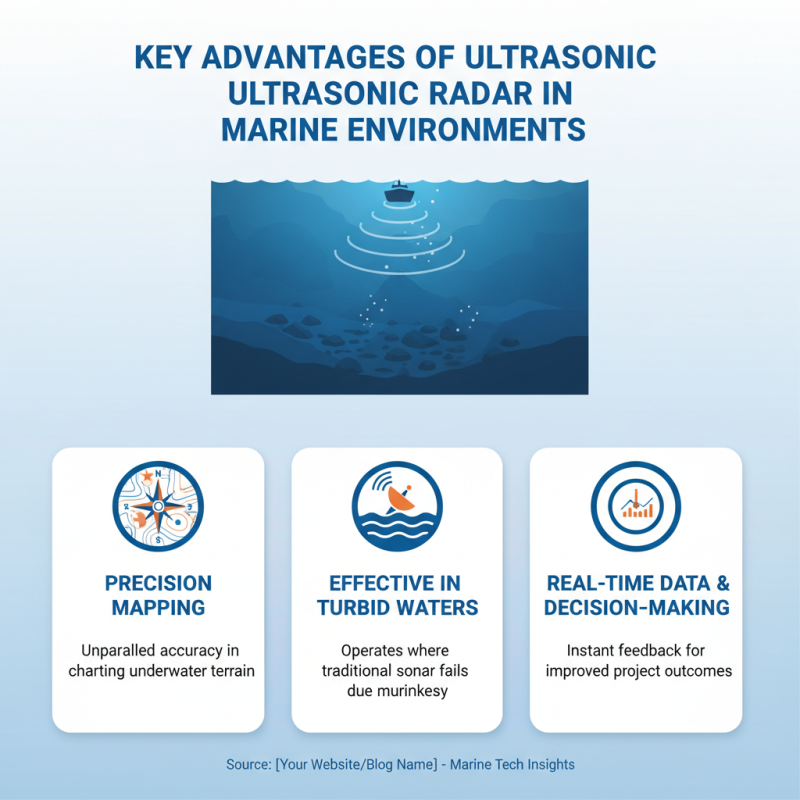
Underwater ultrasonic radar has emerged as a game-changer in marine projects. Its precision in mapping underwater terrains is unparalleled. This technology operates effectively in murky waters, where traditional sonar may fail. Ultrasonic radar provides real-time data, enhancing decision-making processes for diverse applications.
One key advantage lies in its ability to penetrate various materials. This makes it suitable for inspecting submerged structures, ensuring their integrity. The radar can detect potential hazards, like underwater obstacles, increasing safety for vessel operations. A reliable radar system reduces the risks associated with manned inspections in dangerous environments.
When utilizing ultrasonic radar, consider how to optimize its capabilities. Regular calibration improves accuracy. Additionally, divers should be trained in interpreting radar data effectively. This training enhances teamwork in marine projects, boosting overall success. Emphasizing communication reduces the chances of confusion during operations. Always document findings systematically for future reference.
Applications of Underwater Ultrasonic Radar in Marine Projects
Underwater ultrasonic radar technology plays a crucial role in marine projects. It helps in mapping underwater terrain with precision. This technology uses sound waves to detect objects and measure distances. It is particularly effective in murky waters, where visibility is limited. Professionals rely on this technology for various applications, enhancing the safety and efficiency of underwater operations.
One key application is in environmental monitoring. Ultrasonic radar can help track changes in marine ecosystems. Researchers can identify shifts in habitat and species distribution. This data is vital for conservation efforts. Another application is in underwater construction. It aids in site assessment before starting projects. Knowing the seabed conditions can prevent unexpected challenges during construction. While the technology is beneficial, there remain questions about its long-term impact on marine life. Continuous evaluation is necessary to address any potential issues as its use increases.
With the growth of marine industries, the demand for precise underwater surveying rises. Ultrasonic radar offers reliable solutions. However, users must weigh its advantages against environmental considerations. The technology’s effectiveness is undeniable, yet responsible usage is essential to protect marine ecosystems.
Comparative Analysis: Ultrasonic Radar vs. Traditional Sonar Systems
Underwater ultrasonic radar systems have emerged as a powerful alternative to traditional sonar technology. Traditional sonar relies on sound waves, which can be affected by water temperature and salinity. This often leads to inaccurate readings and limited operational ranges. Ultrasonic radar, on the other hand, utilizes ultrasonic signals that provide clearer data regardless of environmental conditions. This enhanced performance is crucial for marine projects that demand precision.
When considering the durability of these systems, ultrasonic radar shows robustness in various marine environments. Traditional sonar systems frequently encounter performance issues over time, affected by waterborne sediments and biological interference. Ultrasonic radar systems, however, can maintain effective functionality with less frequent maintenance. The technology operates at high speeds, providing timely data critical for decision-making.
Many specialists recommend the shift to Wholesale Underwater Ultrasonic Radar systems. This choice is informed by the need for reliable data in complex underwater conditions. While there are still areas for improvement—such as the initial cost and technology adaptation— the benefits far outweigh these concerns. Ultimately, choosing ultrasonic radar enhances the accuracy and long-term efficiency of marine operations, making it a compelling option for modern projects.
Technical Specifications and Performance Metrics of Ultrasonic Radar
Underwater Ultrasonic Radar technology is transforming marine project capabilities. Its technical specifications play a crucial role in operations. This radar can provide high-resolution imaging, even in murky waters. Most systems operate at frequencies between 200 kHz to 1 MHz, striking a balance between range and resolution. Studies show that these systems can achieve object detection ranges of up to 500 meters. This expansive capability enhances underwater surveying, allowing for detailed assessments of marine environments.
Performance metrics demonstrate the reliability of ODM Underwater Ultrasonic Radar. Systems can process data in real-time, ensuring timely decision-making. With a detection accuracy rate of over 95%, operators can make informed choices based on precise readings. Additionally, environmental factors like temperature and salinity may affect performance. Monitoring these conditions is essential for optimal results. While the radar excels in many scenarios, challenging environments can still present limitations, illustrating the need for continuous improvement.
Incorporating user feedback into future designs is vital. Understanding the challenges faced by marine engineers allows for better technology refinement. Regularly analyzing performance in diverse conditions is important. This iterative process can lead to innovations that further enhance underwater exploration. As technology advances, the potential applications of ultrasonic radar will expand, offering new opportunities in marine projects.
Challenges and Limitations of Underwater Ultrasonic Radar
Underwater ultrasonic radar is a powerful tool for marine projects, but it does face significant challenges. One major issue is signal attenuation. Water absorbs and scatters ultrasonic waves. This can lead to reduced range and clarity. In deep or murky waters, the effectiveness of the radar drops considerably. Engineers often struggle with this limitation during underwater mapping or inspections.
Another concern is the complexity of data interpretation. The readings from ultrasonic radar require specialized skills to analyze effectively. Misinterpretation can lead to costly mistakes. It’s also essential to consider environmental factors such as temperature changes and salinity variations. These can impact performance unpredictably.
Moreover, the equipment can be costly and require maintenance. Operators need to be trained to manage the nuances of the technology. Reliability is vital in underwater exploration. If the radar fails during critical operations, it can jeopardize safety and project outcomes. A thorough understanding of these limitations is crucial for successful marine operations.
Why Choose Underwater Ultrasonic Radar for Your Marine Projects? - Challenges and Limitations of Underwater Ultrasonic Radar
| Feature | Advantage | Challenge | Limitation |
| High Resolution Imaging | Provides detailed images of underwater structures. | Affected by water conditions (turbidity, temperature). | Limited effectiveness in very deep waters. |
| Real-time Data Transmission | Instantaneous information for timely decision-making. | Signal interference from marine life and debris. | Range limited to specific frequencies. |
| Versatile Applications | Can be used for mapping, monitoring, and inspection. | Requires specialized training for complex data analysis. | Not suitable for certain environments (i.e., heavily trawled areas). |
| Cost-Effective | Reduces the need for extensive underwater inspections. | Initial investment can be high. | Limited by maintenance and operational costs over time. |
Future Trends in Underwater Ultrasonic Radar Development
The development of underwater ultrasonic radar technology is evolving rapidly. Recent innovations focus on enhancing accuracy in detecting objects underwater. These advancements cater to both commercial and research-oriented marine projects. The rising demand for reliable sonar systems drives this trend. Increased efficiency allows for better data collection and analysis.
One future trend is the integration of artificial intelligence. AI can improve signal processing and object recognition. By analyzing vast amounts of data quickly, AI can predict potential underwater hazards intelligently. Additionally, collaborations with Underwater Ultrasonic Radar Suppliers can advance this technology significantly. They contribute valuable expertise and resources to refine systems further.
Challenges remain in this field. Depth limitations and environmental interferences still affect performance. Moreover, cost-effective solutions for smaller projects are needed. Balancing innovation with affordability is crucial. Stakeholders must consider the long-term benefits of investing in such advanced technology. These necessary reflections will guide future developments in underwater ultrasonic radar systems.
Marine Project Trends in Underwater Ultrasonic Radar
Leveraging 77GHz Microwave Radar Technology for Enhanced Blind Spot Detection: Insights from Industry Reports and Market Trends
The integration of 77GHz microwave radar technology into automotive safety systems is paving the way for more advanced Blind Spot Detection solutions. Recent industry reports indicate a growing demand for safety features that enhance vehicle awareness, especially as road traffic increases. This technology provides significant enhancements in detection range and accuracy, with systems capable of identifying objects up to 90 meters away and achieving an impressive 99.5% detection accuracy. Such high performance is crucial for ensuring driver safety, as it allows for quicker response times in avoiding potential collisions.
Furthermore, the capabilities of modern radar systems are underscored by their target update rates, which can reach as low as 40 milliseconds. This rapid data processing enables real-time analysis, critical for functions like Lane Change Assistance (LCA), Blind Spot Detection (BSD), and Rear Cross Traffic Alert (RCTA). These functions rely on timely and accurate data to alert drivers of nearby obstacles, thus enhancing decision-making during maneuvers.
Additionally, the robustness of these systems is reflected in their design specifications, which often meet AEC-Q100 standards and IP67 ratings, ensuring durability and reliability under various environmental conditions. The adoption of advanced processors, such as the Calterah CAL77S244, further enhances the performance of radar solutions, solidifying their role as vital components in the automotives of tomorrow. As market trends continue to shift towards smarter and safer vehicles, the evolution of 77GHz radar technology stands at the forefront, promising to transform the landscape of automotive safety comprehensively.
FAQS
: It detects objects underwater and maps the ocean floor.
It utilizes sound waves, making it effective in murky waters.
It provides better resolution and detailed images of underwater environments.
Frequency and range are crucial; higher frequencies have better resolution but shorter range.
Without proper training, operators might misread the radar outputs, leading to costly mistakes.
Water temperature and salinity can significantly impact the results.
There are questions regarding its long-term effects; continuous evaluation is needed.
Systems achieve over 95% accuracy but must adapt to varying environmental conditions.
It helps refine designs based on real-world challenges faced by marine engineers.
Regular analysis of performance and incorporating new advancements will drive innovation.
Conclusion
Underwater Ultrasonic Radar is an innovative technology that offers significant advantages for marine projects. By utilizing sound waves at ultrasonic frequencies, this radar system provides enhanced imaging and object detection capabilities in complex underwater environments. Its key benefits include greater accuracy, improved range, and the ability to perform in challenging conditions where traditional sonar systems may fall short.
Applications of Underwater Ultrasonic Radar span various marine fields, from ecological monitoring to infrastructure inspection. While it presents distinct benefits, it also faces challenges such as potential limitations in specific environments and the need for robust technical specifications. As the technology continues to evolve, future trends indicate advancements that will further refine its performance and broaden its applications, solidifying its role in the development of marine projects.

 Front & Rear Parking Assist
 Automatic Parking Assist
 Wade Sensor System
 79GHz Kick Step-on Open System
 79GHz Door Open Warning System
 77GHz Blind Spot Detection
 77GHz Long Range Detection
 60GHz Child Presence Detection
 360 Panoramic Camera
 Driver Fatigue Monitoring System
 Dash Camera
 ADAS Camera
 Streaming Rearview Mirror
 Self Cleaning Camera
 Car Radio
 Infotainment System
 Wireless Charger
 Ultrasonic Sensors System
 4-Image Camera Monitoring System
 Driver Fatigue Monitoring System
 77GHz Blind Spot Detection
 ADAS Camera
 Camera Monitoring System