Leave Your Message
0%

China’s driver-assistance space is clearly picking up steam, and it’s happening right alongside the broader boom in vehicle production and electrification. According to the China Association of Automobile Manufacturers, total vehicle sales hit about 31.4 million in 2024. Of those, new-energy vehicles accounted for roughly 12.9 million — that’s around 40.9% of the market. Now, these numbers don’t directly tell us how many cars actually have advanced driver-assistance systems. But they do explain why so many automakers and suppliers are pouring money into cameras, radar, computing platforms, and software.

You know, a Driving Assistance System isn’t really one single product. It’s more like a bunch of components working together—sensors, control units, algorithms, and the vehicle itself. And China’s Ministry of Industry and Information Technology has been pushing pilot programs for intelligent connected vehicles, which gives development and testing a real boost. So yeah, the pace is real. But rankings? Those vary—and honestly, they vary a lot. Just because a supplier is really good at perception software doesn't automatically mean they’re leading the pack in sensors or domain controllers, you know?

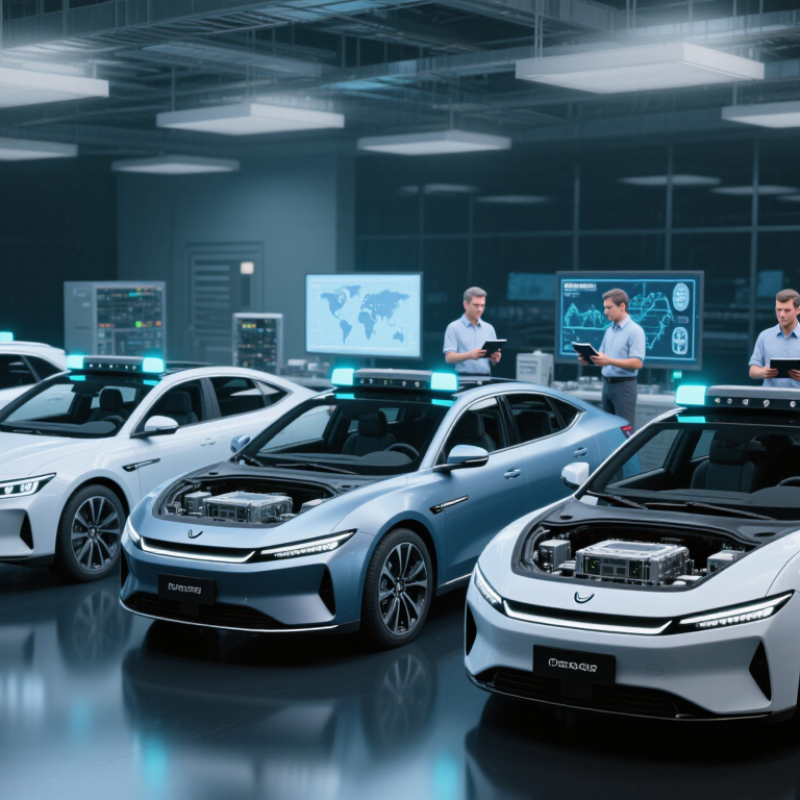
So, this overview takes a look at a few big names—Huawei, Bosch, Desay SV, Momenta, and DJI Automotive. Instead of trying to crown one "best" supplier or rank them all, it’s more about comparing what each brings to the table: their strengths, who they’re partnering with, and where they sit in the supply chain. CAAM’s 2024 numbers give us some useful context, and company disclosures plus automaker partnerships help fill in the picture. But those sources aren’t perfect. Announcements can only tell us so much—they don’t always show actual shipment volumes or how systems really perform in day-to-day driving. So yeah, that gap really deserves attention. A solid assessment can't just take tech claims at face value — it also has to weigh real-world production experience, how customers are actually adopting things, and whether there's solid evidence to back it all up.
What Are the Top Driving Assistance System Suppliers in China?

What Driving Assistance Systems Include and How They Work

Driving assistance systems combine sensors, software, and vehicle controls to help drivers notice hazards and manage routine tasks. A forward camera can identify lane markings and traffic signs. Radar measures the distance and relative speed of nearby vehicles, while Ultrasonic Sensors can detect obstacles during low-speed parking. The car’s control unit processes these signals and may issue a warning or provide limited braking or steering support. Conditions matter. Rain, glare, worn lane markings, or a blocked sensor can affect detection.

Common functions include adaptive cruise control, lane departure warnings, automatic emergency braking, and blind-spot alerts. For example, when a vehicle ahead slows, adaptive cruise control can reduce speed to maintain a selected gap. If a driver drifts toward a visible lane line, a system may sound an alert or gently assist steering. These features support the driver; they do not replace attention or judgment. An OEM Driving Assistance System also needs careful calibration and testing across different road conditions. Even so, no setup catches every situation, and a warning can arrive later than expected. That deserves thought. Drivers should learn what each feature can—and cannot—do before relying on it.

How China’s Driver Assistance Market Has Developed

China’s driver assistance market has moved from basic Parking Sensors and rear-view cameras toward systems that can support several driving tasks. Wider use of cameras, radar, and onboard computing has made features such as lane warnings and adaptive cruise control more accessible. The change is visible in everyday details: a dashboard alert, a camera view while reversing, or a gentle steering correction on a marked road. These systems still depend on clear lane markings and well-maintained sensors. They are assistance, not a substitute for an attentive driver.

Market growth reflects more than consumer demand. Vehicle makers increasingly treat driver assistance as part of a car’s core electronics, while suppliers compete on integration, reliability, and cost. Local production and a broad automotive supply chain have helped shorten development cycles, though software validation remains demanding. A Wholesale Driving Assistance System buyer should compare sensor coverage, operating limits, update support, and compatibility—not just feature lists. Conditions vary across highways, crowded city streets, and poor weather. Progress is real, but uneven; that deserves scrutiny. Some alerts can feel intrusive, and drivers may misunderstand what a system can handle. Better testing and clearer in-car explanations remain important as adoption expands.

China’s Vehicle Market: A Foundation for Driver Assistance

Annual vehicle sales in China, 2019–2024 (millions of vehicles)

China’s vehicle sales grew to 31.44 million in 2024, expanding the addressable market for driver assistance technologies. Total vehicle sales provide market context; they do not measure ADAS adoption or supplier market share. Source: China Association of Automobile Manufacturers (CAAM), annual vehicle sales data.

Which Companies Lead China’s Driving Assistance Supply Chain

China’s driving-assistance supply chain is led by capable integrators, not one supplier type. Tier-one systems companies combine cameras, radar, control units, and software into vehicle-ready packages. Sensor and computing suppliers provide the hardware; engineering and manufacturing partners help automakers adapt it across models. CAAM reported 30.09 million vehicle sales in China in 2023, including 9.50 million new-energy vehicles. That scale creates strong demand, but sales volume alone does not prove technical leadership.

CAICT estimated China’s intelligent connected vehicle industry at about 1.2 trillion yuan in 2023. The figure covers a wider industry than driving assistance, so it should not be read as an ADAS market-size estimate. For buyers, useful measures include tested performance in rain and glare, integration time, and support across different vehicle platforms. An ODM Driving Assistance System partner can shorten development work, but only if its software, sensors, and validation process fit the vehicle. Small details matter. A camera’s view can change with windshield angle, and that can complicate calibration. Supplier rankings also shift quickly; public data rarely compares every system on equal terms.

What Technologies Distinguish Major Chinese Suppliers

Chinese driving-assistance suppliers stand apart through sensor fusion, computing architecture, and how well software handles local roads. The China Association of Automobile Manufacturers reported that Level 2 assistance reached 55.7% penetration among new passenger cars in 2023. That scale makes reliable everyday functions—not just impressive demonstrations—a key test. Camera-and-radar fusion can support lane centering and adaptive cruise control in clear conditions. Higher-end systems may add lidar, but extra sensors cannot fix weak perception or poor calibration. That matters.

Computing platforms are another dividing line. Suppliers increasingly combine centralized domain controllers with software that can be updated and tuned after delivery. The SAE J3016 framework is a useful reference: Level 2 systems still require drivers to supervise the road and remain ready to intervene. In practice, a good system should respond smoothly when lane markings fade, traffic cuts in, or a parking space narrows. It should also explain limits clearly. Not every supplier gets this right. Strong validation across varied weather, road markings, and vehicle models matters more than a long feature list, though public data rarely makes those differences easy to compare.

How Suppliers Compare Across Products and Capabilities

What Are the Top Driving Assistance System Suppliers in China?

How Suppliers Compare Across Products and Capabilities

Comparing suppliers is more useful when you examine the full system, not one sensor or feature. Check camera and radar coverage, computing capacity, software updates, and how smoothly each system works with a vehicle’s controls. China’s market scale raises the stakes: the China Association of Automobile Manufacturers reported 31.436 million vehicle sales in 2024, including 12.866 million new-energy vehicles. The International Energy Agency’s Global EV Outlook 2025 also reported that China produced over 70% of the world’s electric cars in 2024. These figures describe a fast-moving market, not a supplier ranking.

Capability differences often appear in ordinary situations: a camera handling glare at dusk, or a system recognizing lane markings after rain. Ask for evidence from local-road testing, clear limits on supported features, and a plan for software maintenance. Compare performance across vehicle types, too; results in one model may not transfer neatly to another. There is no perfect scorecard. Some useful details remain difficult to compare publicly.

Tips: Request test results for the routes and weather your vehicles actually face. Check sensor, computing, and update support together. Fit matters. A polished demo is not enough.

What Factors Shape Supplier Selection and Future Growth

Choosing a Driving Assistance System Supplier in China requires more than comparing sensor lists. Check how the system performs in rain, glare, and dense urban traffic. Ask for test data across different road types, not only smooth proving-ground routes. Camera resolution matters, but so do software updates, calibration procedures, and clear fault reports. A supplier that explains limitations is often more useful than one promising flawless performance.

Tips: Request a sample validation report. Check response times for software fixes. Confirm who supports integration and on-site testing.

Future growth depends on reliable engineering, adaptable platforms, and steady investment in research. Suppliers that support updates across vehicle models may help reduce redesign work. Still, rapid feature expansion can create integration problems. Review how the system handles sensor disagreement, such as a camera and radar detecting different obstacles. Ask engineers to demonstrate the issue and explain the fallback behavior. This detail is easy to overlook. Procurement teams should also assess production consistency, component traceability, and long-term technical support. A low initial price may not reflect later calibration or maintenance costs. Selection is rarely tidy; even strong test results leave questions about performance after years of use.

What Are the Top Driving Assistance System Suppliers in China? — What Factors Shape Supplier Selection and Future Growth

An anonymized, qualitative overview of supplier categories and the factors influencing selection. Categories are not ranked; no company or brand names are shown.

Supplier category Typical ADAS products and capabilities Common selection factors Potential growth drivers Key challenges
Domestic automotive Tier-1 suppliers ADAS domain controllers, camera and radar integration, electronic control units, and vehicle-level system integration. Local engineering support, competitive system cost, production readiness, quality consistency, and ability to integrate with an automaker’s vehicle platform. Wider availability of driver-assistance features across vehicle price segments; demand for integrated computing and locally supported development. Meeting demanding reliability and validation requirements across vehicle models and operating conditions.
Global automotive Tier-1 suppliers Established ADAS electronics, cameras, radar, control units, and interfaces with braking or steering systems. Demonstrated production experience, functional-safety processes, global engineering resources, and long-term supply capability. Continued demand for mature, validated systems and for suppliers able to support programs across multiple markets. Adapting products, costs, and development schedules to individual Chinese vehicle programs and market needs.
Driving-assistance software and platform suppliers Perception software, sensor fusion, assisted parking, highway assistance, and software or computing platforms for ADAS features. Real-world performance, integration with vehicle hardware, software update support, data-management practices, and evidence from testing. More capable software-defined vehicle architectures and the addition of higher-function driving-assistance features. System validation, operational limits, cybersecurity, and demonstrating sustainable commercial value to automakers.
Sensor and component specialists Automotive cameras, millimeter-wave radar, ultrasonic sensors, imaging components, and lidar for selected applications. Detection performance, environmental robustness, calibration needs, automotive-grade reliability, and total system cost. Demand for sensors that support functions such as automatic emergency braking, adaptive cruise control, and parking assistance. Balancing performance, packaging, power use, and cost while meeting vehicle-program qualification requirements.
Chassis and actuation system suppliers Electronic braking, steering, and other vehicle-control systems that can execute commands from driver-assistance functions. Response consistency, system availability, safety engineering, diagnostic capability, and compatibility with vehicle electronics. Growing integration between perception, decision-making, and vehicle motion control as ADAS functions expand. Ensuring dependable operation and safe fallback behavior when sensors, software, or communications encounter faults.

How automakers typically compare suppliers: assess safety and validation evidence, performance in relevant road and weather conditions, vehicle-platform compatibility, cybersecurity and software support, manufacturing quality, supply resilience, localization, and total cost over the vehicle program.

Driver Fatigue Monitoring Systems: NHTSA’s 2017 Data Estimated 91,000 Drowsy-Driving Crashes

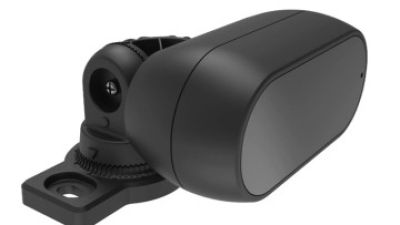
NHTSA’s 2017 data estimated that drowsy driving was involved in 91,000 crashes, highlighting the importance of recognizing fatigue before it leads to a dangerous moment on the road. A driver fatigue monitoring system can support this effort by observing facial cues and behavior associated with reduced alertness. By providing timely indications when signs of fatigue appear, it can help drivers and fleet operators respond appropriately, while remaining an aid rather than a replacement for rest and attentive driving.

Reliable monitoring depends on clear images in varied conditions. A system with effective pixels of at least 1280 × 720 and a central resolution of 720 lines can capture facial details for analysis. A 940 nm filter glass paired with a 940 nm infrared lamp supports image recognition in low-light settings, while optical distortion correction helps maintain image quality. With identification and false-alarm rates each at or below 3%, the system is designed for consistent detection. Its 2G3P optical configuration and IP67-rated protection further support use in demanding vehicle environments, and combined face and behavior monitoring can provide a broader view of driver alertness.

FAQS

How should buyers compare driving assistance suppliers?

Compare the full system, including cameras, radar, computing, software updates, and vehicle-control integration. One strong sensor proves little.

What road conditions should supplier tests cover?

Request results from rain, dusk glare, and dense urban traffic. Include local roads and different vehicle types.

Why are ordinary driving situations important?

Lane markings may become harder to detect after rain. A camera may also struggle with glare at dusk. Details matter.

What should buyers ask about software support?

Confirm update schedules, fault-reporting methods, and response times for fixes. Ask who handles calibration and on-site integration.

How can buyers assess system limitations?

Request clear limits for supported features and a sample validation report. A supplier should explain failures, not hide them.

What happens when camera and radar disagree?

Ask engineers to demonstrate the conflict and explain the system’s fallback behavior. This detail is easy to miss.

Do successful test results guarantee long-term performance?

No. Results from one vehicle may not transfer to another. Performance after years of use can remain uncertain.

What costs should procurement teams consider beyond the initial price?

Review calibration, maintenance, production consistency, component traceability, and long-term technical support. A low price can mislead.

Conclusion

A Driving Assistance System combines sensors, cameras, radar, computing hardware, and software to help drivers perceive road conditions and respond more safely. Features may include adaptive cruise control, lane support, collision warnings, and automated parking. In China, the market has grown alongside advances in vehicle technology, expanding demand for capable suppliers across the automotive supply chain.

Leading suppliers can differ in their strengths: some focus on sensing components, others on algorithms, integrated platforms, or complete system solutions. Their technologies are distinguished by factors such as detection accuracy, reliability in varied driving conditions, processing speed, and ease of integration. Comparing suppliers therefore involves more than counting available features; vehicle compatibility, performance, development support, cost, and long-term service also matter. As the market evolves, continued innovation, stronger integration, and changing expectations for safety and convenience are likely to shape supplier selection and future growth.
Nathan

Nathan

Nathan is a dedicated marketing professional at Zhuhai Shangfu Electric Technology Co., Ltd., where he showcases his extensive expertise in the company's innovative product offerings. With a deep understanding of the technical specifications and applications of their electric technology solutions,......
Previous How to Choose the Best Driver Fatigue Monitoring System