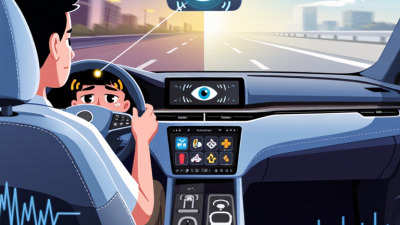
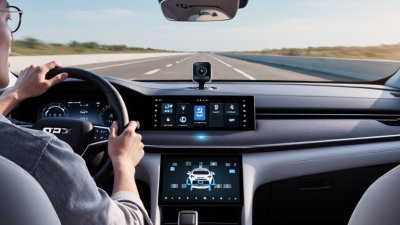
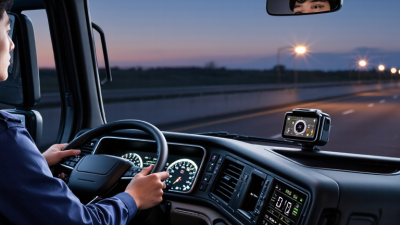
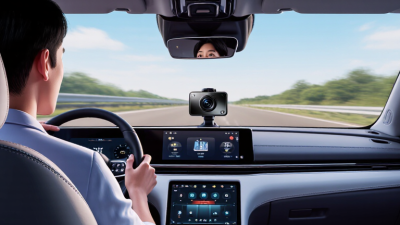
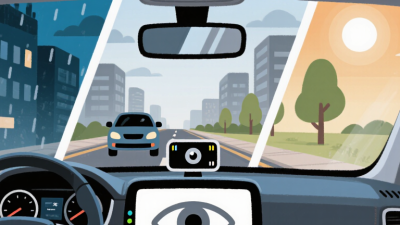
You know that feeling when you're driving down a road you've taken a hundred times, and suddenly everything starts to blur? That's driver fatigue for you—it can turn a familiar highway into a dangerous routine. But here's the thing: a Driver Drowsiness Monitoring System can catch that risk before your attention completely fades. It might track things like how often you blink, how long your eyes stay closed, where you're looking, your head position, even how you're steering. Some systems use infrared cameras to see in the dark, while others mix cabin sensors with data from the car itself.
You know, Dr. Mark Rosekind—the sleep scientist and former NHTSA bigwig—he put it pretty bluntly: 'Drowsy driving is impaired driving.' That's been my starting point whenever I think about the whole modern monitoring tech scene. And honestly, it's not just about which brand you see plastered on the dashboard. Yeah, Seeing Machines, Smart Eye, Cipia, Continental, Valeo—they all have their own tricks, different sensors, different software tweaks. But the real question is: do they actually work when it counts? Like, how accurate are they, really? Do they react fast enough? Are you comfortable with them poking at your face while you drive? How's the installation—does it feel like an afterthought? And can they still see you at night when it's pitch black? All that stuff matters way more than the logo on the box.
To be honest, the real test is out on the road. A reliable system has to pick up on prolonged eye closure even when the driver's wearing shades, or when there are cabin shadows, or the sunlight keeps changing. It should warn the driver clearly, but not in a way that adds to their fatigue. Fleet operators? They've got their own needs—useful data, easy upkeep, and a design that respects privacy. Sure, having published validation is good, but it's not the full story. Road conditions differ, and human behavior? That differs even more. And there's no such thing as a perfect supplier.
So, in this piece, we're diving into the top players making Driver Drowsiness Monitoring Systems. We'll look at them from a practical, technical, and evidence-based angle – you know, the stuff that really matters. We're talking sensor capabilities, AI smarts, how well they integrate into vehicles, their track record in the market, and even the after-sales support you'd get. But here's the thing: some comparisons aren't going to be perfect, because these companies don't all use the same testing methods. And honestly, that's something we should acknowledge rather than sweep under the rug. Honestly, the best bet is usually the one that just works reliably in your actual car, the weather you deal with, and the way you drive it. It's not about the flashiest specs—it's that steady performance that counts, you know?
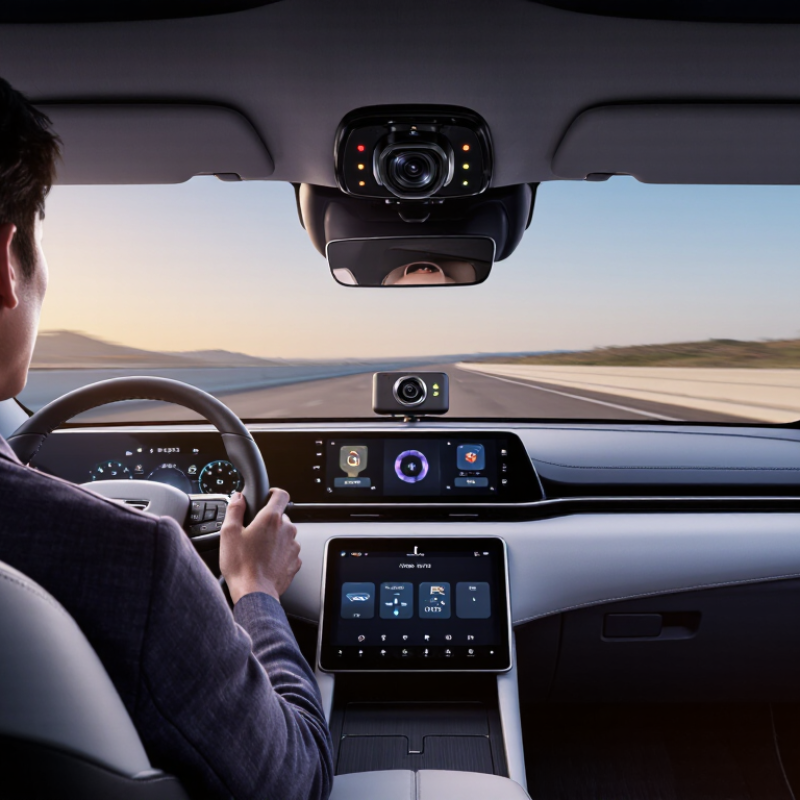
A driver drowsiness monitoring system detects signs that a driver may be losing alertness. It supports safer decisions during long journeys, night shifts, and monotonous highway travel. The system usually observes eye closure, blink duration, head position, and facial movement. Some solutions also study steering corrections and lane behavior. These signals help estimate fatigue before a driver fully loses concentration.
Its purpose is not to control the vehicle or replace human judgment. It provides timely warnings, such as an audible alert, seat vibration, or dashboard message. A practical system should work through sunglasses, changing daylight, facial differences, and ordinary cabin movement. Poor camera placement can reduce accuracy. So can a dirty lens. These details matter in real vehicles.
An OEM Driver Drowsiness Monitoring System can be integrated during vehicle production or adapted for commercial fleets. Engineers should test it across roads, drivers, weather conditions, and driving durations. False alarms may annoy drivers and encourage them to ignore future warnings. That weakness deserves honest review. No system is perfect. Clear warning levels, privacy-conscious data handling, and regular maintenance improve reliability. The most useful design supports safer habits without creating a false sense of security.
Top Driver Drowsiness Monitoring System Manufacturers?
Core Technologies Used to Detect Driver Fatigue
Modern driver drowsiness monitoring systems combine cabin cameras, infrared illumination, and computer vision. A near-infrared camera can observe eyelid movement in darkness. It tracks blink duration, eye closure, gaze direction, and repeated yawning. Facial landmarks help estimate whether the driver is looking forward or drifting away. Small details matter, such as a lowered chin or unfocused eyes after long highway driving.
Many systems also measure head pose, steering corrections, lane position, and driving-time patterns. Sensor fusion improves reliability because no single signal is perfect. A camera may struggle with sunglasses, face masks, glare, or an unusual seating position. Steering data can be affected by roadworks or strong crosswinds. These limitations require careful calibration and real-world testing, not only laboratory demonstrations.
Edge-based artificial intelligence can process alerts inside the vehicle with low delay. It may issue a visual warning, seat vibration, or audible prompt when fatigue indicators increase. Some advanced designs examine heart rate or skin signals through vehicle sensors, but these measurements need consistent contact. For a Wholesale Driver Drowsiness Monitoring System, buyers should examine detection accuracy, false-alert rates, night performance, data handling, and installation stability. Human review remains valuable. A tired driver does not always look tired, and an alert does not guarantee a safe response.
Top Driver Drowsiness Monitoring System Manufacturers: Key Features of Leading System Manufacturers
Leading driver drowsiness monitoring system manufacturers now combine infrared cameras, facial landmarks, steering behavior, and vehicle data. These systems estimate eyelid closure, gaze direction, head position, and prolonged distraction. NHTSA reported 684 deaths involving drowsy driving in 2021. The AAA Foundation also estimated 328,000 annual crashes involving a drowsy driver. The figures remain imperfect because fatigue is difficult to prove after a collision.
High-quality suppliers support real-time edge processing, low-light performance, and adjustable warning levels. Their platforms should connect with vehicle networks and support functional-safety development under ISO 26262 practices. Euro NCAP’s 2023 assessment protocols increased attention to driver engagement and fatigue monitoring. An ODM Driver Drowsiness Monitoring System can also offer customized camera placement, software interfaces, and fleet-specific alert logic. However, no algorithm reads human fatigue perfectly. Sunglasses, poor mounting angles, and unusual driving habits can still create false alerts.
Tips: Test the system during night driving, road vibration, and frequent stop-and-go traffic. Review false-positive rates, not only detection accuracy. Ask manufacturers for validation data from varied drivers and cabin conditions. A useful system should warn early, but not irritate the driver. That balance needs continuous review.
| Evaluation Dimension | Leading-System Capability | Practical Benchmark | Operational Value | Recommended Verification |
|---|---|---|---|---|
| Driver Sensing Method | Non-contact in-cabin monitoring using a camera-based optical sensor, commonly supported by infrared illumination for night operation. | Works in both daylight and dark-cabin conditions without requiring the driver to wear a device. | Enables continuous monitoring with minimal driver interaction. | Review performance tests covering glasses, facial hair, masks, head coverings, and different seating positions. |
| Drowsiness Indicators | Analysis of prolonged eye closure, blink duration, blink frequency, yawning, gaze direction, head pose, and microsleep-related behavior. | Uses multiple indicators instead of relying on a single facial cue. | Reduces the risk of false alarms caused by normal blinking or brief changes in gaze. | Request documented test scenarios and alert-performance results under representative driving conditions. |
| Distraction Detection | Identifies extended off-road glances, excessive head turning, phone-related behavior, and other visually distracting activities. | Provides configurable thresholds based on vehicle speed and driving context. | Supports both fatigue prevention and broader driver-attention management. | Check whether distraction events can be configured separately from drowsiness events. |
| Alert Strategy | Multi-stage alerts that may combine visual, audible, and haptic feedback, with escalation based on persistent risk. | Warning levels are adjustable to avoid unnecessary alarm repetition. | Gives the driver an early warning while limiting alert fatigue. | Evaluate alert timing, volume control, escalation logic, and driver acknowledgment handling. |
| Night and Low-Light Performance | Infrared-assisted imaging with image processing designed for low illumination and changing cabin brightness. | Maintains useful facial-feature tracking during nighttime driving and tunnel entry. | Provides continuous coverage across day and night operating cycles. | Test direct sunlight, backlighting, tunnel transitions, sunglasses, and windshield reflections. |
| Occupant and Seat Recognition | Determines whether a monitored seat is occupied and can distinguish the driver position from other occupants. | Supports left-hand-drive and right-hand-drive vehicle configurations when properly calibrated. | Prevents irrelevant alerts from passengers and improves fleet deployment flexibility. | Confirm supported seating layouts, camera mounting tolerances, and calibration procedures. |
| Real-Time Processing | Local or edge processing of camera data for immediate event detection, with optional transmission of event metadata. | Critical warnings remain available even when cloud connectivity is unavailable. | Reduces response delay and improves resilience in areas with weak network coverage. | Measure alert latency and confirm which functions continue during network or GNSS loss. |
| Privacy Protection | Configurable image retention, access control, encryption, and event-only data transmission. | Supports data minimization and can operate without continuous storage of facial video. | Helps fleet operators address privacy, cybersecurity, and employee-monitoring concerns. | Review data-flow diagrams, retention settings, user permissions, and applicable privacy documentation. |
| Fleet and Telematics Integration | Interfaces with vehicle networks, telematics platforms, fleet dashboards, and maintenance systems through documented APIs or standard vehicle interfaces. | Provides event time, vehicle status, severity, location, and driver or vehicle identifier where permitted. | Allows managers to identify recurring fatigue risks and plan corrective action. | Verify API documentation, data formats, integration ownership, and offline data synchronization. |
| Driver Identification | Optional driver identification through approved credentials, fleet login, or facial-recognition functions where legally permitted. | Identification and monitoring can be configured as separate functions. | Links safety events to the correct driver while supporting privacy-conscious deployments. | Confirm consent requirements, opt-out handling, biometric-data controls, and identification accuracy. |
| Installation Flexibility | Compact dashboard, steering-column, or instrument-panel mounting with adjustable camera orientation. | Installation does not obstruct the driver’s view, airbags, controls, or required vehicle displays. | Reduces vehicle modification time and simplifies deployment across different cabin designs. | Inspect mounting instructions, field-of-view requirements, cable routing, and recalibration needs. |
| Environmental Durability | Automotive-grade housing and electronics designed for vibration, temperature variation, dust, and electrical transients. | Suitable environmental and electromagnetic specifications are documented for the intended vehicle class. | Improves reliability in commercial vehicles and demanding operating environments. | Request applicable temperature, vibration, ingress-protection, and electromagnetic-compatibility test records. |
| Safety and Cybersecurity Process | Documented product-development controls aligned, where applicable, with automotive functional-safety and cybersecurity practices. | Clear hazard analysis, software-update controls, access management, and vulnerability-response procedures. | Supports safer integration into passenger cars, trucks, buses, and industrial fleets. | Review supplier safety documentation, cybersecurity policy, update mechanism, and incident-response process. |
| Alert Customization | Configurable sensitivity, warning delay, event severity, speed dependency, and driver or fleet profiles. | Settings can be adapted to long-haul, public-transit, passenger-car, and industrial-vehicle use cases. | Balances early intervention with acceptable driver experience. | Test configuration permissions and confirm that safety-critical limits cannot be changed without authorization. |
| Performance Measurement | Provides measurable detection, false-alert, response-time, uptime, and event-quality metrics rather than relying only on demonstrations. | Results are available for varied drivers, lighting conditions, road types, and cabin configurations. | Enables objective comparison of system quality and total operating value. | Ask for test methodology, sample size, environmental conditions, and definitions for each reported metric. |
| Lifecycle Support | Includes firmware updates, remote diagnostics, replacement procedures, technical training, and defined service-level support. | Provides a documented process for software changes, hardware failure, and end-of-life transition. | Reduces downtime and protects the value of a long-term fleet deployment. | Compare warranty duration, update policy, spare-part availability, training, and support response times. |
Selection note: Actual performance depends on vehicle design, camera placement, lighting, driver population, software configuration, and applicable local regulations. Independent validation should be completed before production deployment.
Top Driver Drowsiness Monitoring System Manufacturers?
Driver drowsiness monitoring systems now serve more than private cars. They support trucks, buses, taxis, construction vehicles, mining equipment, and agricultural machinery. Each environment creates different demands. A highway truck may need reliable camera detection during long night routes. A city bus requires fast alerts in crowded traffic. Mining vehicles need systems that tolerate dust, vibration, helmets, and uneven lighting.
Manufacturers should combine cabin cameras, steering behavior analysis, and real-time warning controls. Fleet operators can connect alerts with dispatch dashboards and maintenance records. This helps supervisors identify repeated fatigue risks without relying only on driver reports. In practical evaluations, false alarms remain a concern. Frequent warnings may annoy drivers and weaken trust. No system is perfect. Human review still matters, especially when glare, sunglasses, masks, or poor camera angles affect detection.
Tips: Match the system to the vehicle’s working conditions. Test it during daylight, darkness, rain, dust, and heavy vibration. Check alert timing before large-scale deployment. Train drivers to understand the warning sounds and privacy procedures. Review performance data regularly, but avoid treating one alert as definite proof of fatigue. A careful manufacturer should provide calibration guidance, clear technical documentation, software updates, and responsive support. Reliability is measured in daily operations, not only in controlled demonstrations.
Top Driver Drowsiness Monitoring System Manufacturers?
When comparing a Driver Drowsiness Monitoring System Supplier, start with evidence, not impressive demonstrations. NHTSA’s Traffic Safety Facts reported 684 U.S. deaths involving drowsy driving in 2021. The AAA Foundation estimated about 328,000 annual crashes involve a drowsy driver. These figures justify careful supplier evaluation.
Check how the system measures eyelid closure, gaze direction, head position, and steering behavior. Ask for validation results across night driving, sunglasses, masks, vibration, and different skin tones. A reliable supplier should disclose false-alarm rates, detection latency, test mileage, and failure conditions. Real vehicles matter more than laboratory footage.
Integration also deserves close inspection. The system should process alerts quickly, connect with vehicle networks, and continue operating during weak connectivity. Review cybersecurity controls, data retention, software updates, and functional-safety processes. Independent testing is valuable, especially when reports include difficult weather and tired but attentive drivers.
No scorecard is perfect. Some published accuracy claims use limited samples or convenient routes. That is a warning sign. Request raw test conditions, not only percentages. Field support matters too: installation time, calibration needs, replacement procedures, and response times should be documented. A practical supplier will explain limitations plainly, because even a strong camera can struggle with glare, poor seating posture, or deliberate driver behavior.
When comparing top driver drowsiness monitoring system manufacturers, safety standards should guide the decision. A credible system should support functional safety processes, documented testing, and clear failure alerts. ISO 26262 alignment is valuable for vehicle integration. ISO/SAE 21434 practices can strengthen cybersecurity controls.
Real-world performance depends on more than a camera. The system should detect prolonged eyelid closure, slow head movement, and repeated yawning in changing light. It must work with dashboard displays, steering-wheel alerts, and fleet management software. Poor calibration can create false warnings. That becomes dangerous.
Integration needs careful testing. A camera placed behind a reflective visor may lose accuracy. Night driving, sunglasses, facial hair, and cabin vibrations also require evaluation. Manufacturers should provide audit records, update procedures, and measurable response times. Data privacy deserves equal attention. Systems should collect only necessary information, process video locally when possible, and encrypt stored event data. Access permissions must be limited and traceable. Retention periods should be explicit, not hidden in technical documents.
No system is flawless. A tired driver may still ignore an alert. Buyers should review independent test results, maintenance requirements, and human-factors research before deployment. Privacy notices must be understandable to drivers, not written only for lawyers. The strongest suppliers explain limitations openly, even when that weakens their sales message.
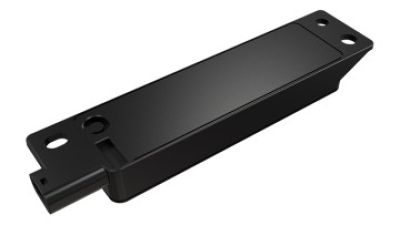
A 79GHz door open warning system uses high-frequency radar to detect approaching vehicles, bicycles, motorcycles, and other road users near a parked vehicle. When an occupant is about to open a door, the system monitors the adjacent area and provides a timely warning if a potential collision risk is detected. With detection range resolution below 0.06 m and accuracy better than 1 cm, it can identify nearby targets with a high level of precision. A maximum blind area of only 0.1 m helps reduce missed detections close to the vehicle, while the 50 ms target update rate supports rapid response in changing traffic conditions.
Designed for dependable operation in demanding environments, the sensor features IP6K7 and IP6K9 protection against water and dust. This allows it to remain functional during heavy rain, vehicle washing, and exposure to road debris. Compliance with ISO 11898 and J1939 standards enables reliable communication with compatible vehicle electronic systems. Since the unit requires no calibration, installation is straightforward and can help simplify integration into different vehicle platforms, supporting safer door opening and reducing the likelihood of accidents in busy parking areas and roadside situations.
It detects signs of reduced alertness during long trips, night driving, and monotonous highway travel. It supports safer decisions.
It may track eyelid closure, blink duration, gaze direction, head position, yawning, steering corrections, and lane movement. Small changes matter.
A near-infrared camera observes facial movement when cabin lighting is poor. It can monitor eye activity without bright illumination.
The system may provide an audible alert, seat vibration, or dashboard message. Warnings should be clear and timely.
No. It only provides assistance. A warning cannot guarantee a safe response from a tired driver.
Sunglasses, face masks, glare, dirty lenses, poor camera angles, and unusual seating positions can cause errors. Real cabins are messy.
Review night performance, false-alert rates, installation stability, and validation results. Test varied drivers and cabin conditions.
Frequent warnings may annoy drivers and reduce trust. The system should warn early, but not cry wolf repeatedly.
Regular lens cleaning, camera checks, software reviews, and calibration can help. Continuous testing remains necessary.
Yes. Data collection should be limited, protected, and clearly explained. Useful monitoring should not create unnecessary privacy concerns.
A Driver Drowsiness Monitoring System is designed to detect signs of driver fatigue and provide timely warnings before reduced alertness leads to unsafe driving. These systems commonly combine camera-based facial analysis, eye and head movement tracking, steering behavior, lane position, and other vehicle data to identify patterns associated with drowsiness or distraction. Advanced solutions may use artificial intelligence to improve detection accuracy across different lighting conditions, driving styles, and road environments.
Leading manufacturers are typically evaluated by detection reliability, response speed, ease of installation, system compatibility, scalability, and the quality of Driver Alerts. Applications extend across passenger vehicles, commercial fleets, public transportation, logistics, mining, agriculture, and industrial operations. Important considerations also include compliance with applicable safety standards, smooth integration with vehicle electronics and fleet platforms, secure data storage, limited data collection, and transparent privacy controls. The best solutions balance effective fatigue prevention with practical operation, cybersecurity, and respect for driver privacy.