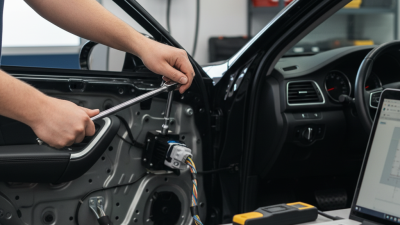
So, an Automatic Car Door Closer is basically a powered setup that gently pulls a car door all the way into its latched position. It makes getting in easier—especially if you don't have much strength or the door is heavy. And unlike a plain manual latch, it doesn't stop once the door hits the catch; it finishes the job. That last bit? It feels quiet, controlled, and honestly pretty precise.
Usually, it starts when a latch sensor picks up where the door is. Then a control module tells an electric actuator to do its thing—maybe a small motor, gears, or a cable. The actuator pulls the latch in until the door seals snug against the weatherstrip. Some systems watch for resistance and stop if they hit something. Others just rely on the vehicle's existing door electronics and warnings. From what I've seen in practical inspections, alignment really matters. Even a tiny hinge shift can cause noise, slow operation, or the door not closing all the way.
A good system should close the door without slamming or forcing it. It also needs to keep working in heat, cold, dust, and day-after-day use. That said, factory-installed and aftermarket versions don't always perform the same. That difference is worth paying attention to. A closer might look simple, but a bad install can mess with latch alignment, battery draw, and emergency operation. Vehicle docs and a qualified tech are still your best references. And owners should never use this feature as a replacement for checking the dashboard door warning. It's helpful tech, not perfect tech. Once you understand the parts, odd sounds and inconsistent movement get a lot easier to figure out.
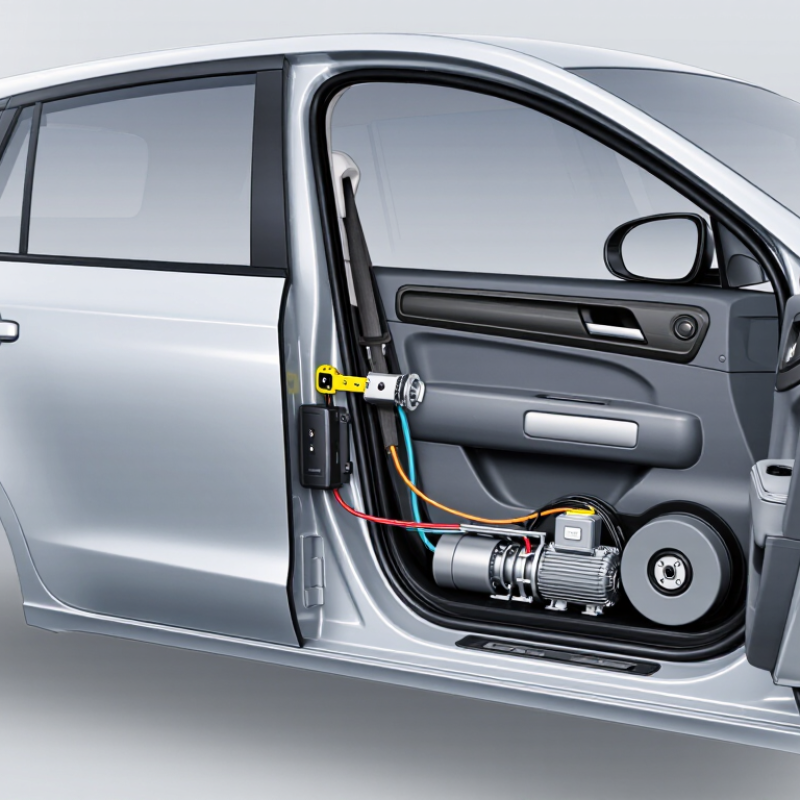
An automatic car door closer is a powered mechanism that pulls a partly closed door firmly into the latch. It is usually built into the door or latch assembly. The system may include an electric motor, gears, sensors, and a control module. Unlike a manual door, it needs only a gentle push to complete the closing action.
When the door reaches the first latch position, a sensor detects its location. The control module then activates the motor. Gears draw the door inward until the latch reaches its fully secured position. A soft mechanical stop helps reduce noise and prevents excessive force. The system may also stop if it detects resistance, such as an object near the latch. That protective response is important in daily use.
In practice, the closer is most noticeable in heavy doors, tight parking spaces, or vehicles with large weather seals. A properly adjusted system should pull smoothly, without rattling or repeated motor sounds. It should not slam. If the door remains partly open, the problem may involve alignment, dirt, a weak battery, or worn seals. Diagnosing the cause requires care because the motor can hide a mechanical fault. I have found that people often mistake assisted latching for fully automatic opening and closing. They are different functions. Regular inspection still matters, even when the system seems convenient.
An Automatic Car Door Closer uses controlled force to pull a partially closed door into its final locked position. The system usually combines an electric actuator, a latch assembly, sensors, a control module, wiring, and a stable power supply. The actuator may use a compact motor and gears. These parts move a cable, lever, or integrated closing mechanism. The latch then grips the striker firmly, instead of relying on a hard slam.
Sensors detect door position, latch engagement, and unexpected resistance. The control module interprets these signals before activating the actuator. If an object blocks the door, the system should stop or reverse movement. A manual release is also important during power loss or maintenance. In real service work, loose wiring and poor alignment often cause false warnings. Small installation errors can create noticeable closing noise. No system is perfect.
Tips: Check the striker and latch alignment regularly. Keep the closing path clear of bags, fingers, and ice. Test the manual release and obstruction response during routine inspections. Listen for grinding sounds or delayed movement. These signs may indicate worn gears, weak power connections, or a damaged sensor. Use manufacturer-approved specifications for adjustment, and ask a qualified technician to inspect uncertain faults. A closer that feels unusually forceful deserves attention, even when the door still appears to work.
| No. | System Component | Primary Function | How It Works | Typical Construction or Information |
|---|---|---|---|---|
| 1 | Door Latch Assembly | Secures the door to the vehicle body and provides the final locking position. | The latch usually has a first detent for a partially closed door and a second detent for a fully closed door. The closer drives the latch from the first position to the fully latched position. | Normally includes a rotating claw, pawl, return springs, and an integrated or connected actuator. |
| 2 | Electric Actuator | Supplies the force needed to pull the door into the fully closed position. | When the control module detects a partially latched door, the motor turns in the required direction and moves a cable, lever, or gear-driven mechanism. | Usually a compact direct-current motor designed for short operating cycles and low-speed, high-force movement. |
| 3 | Reduction Gearbox | Converts the motor’s high-speed rotation into controlled torque. | A set of reduction gears lowers output speed and increases turning force so the actuator can overcome door-seal resistance and latch friction. | Commonly uses metal or engineered-polymer gears with grease lubrication inside a sealed housing. |
| 4 | Position and Latch Sensors | Report whether the door is open, partially latched, fully latched, or in motion. | Switches, Hall-effect sensors, or similar position sensors send status signals to the control electronics, allowing the system to start and stop at the correct points. | The sensing arrangement varies by vehicle design and may be integrated directly into the latch. |
| 5 | Electronic Control Module | Controls when the closer operates and manages safety logic. | It evaluates sensor signals, applies operating time and current limits, commands motor direction, and stops the actuator after full closure or when an obstruction is detected. | May be a dedicated module or a function integrated into a broader vehicle body-control system. |
| 6 | Door-Ajar Detection Circuit | Confirms whether the door has reached the secure position. | If the latch does not reach the fully closed state, the vehicle can warn the driver and prevent the system from reporting a secure door. | Often shares latch sensors and vehicle communication circuits with the interior warning system. |
| 7 | Striker | Provides the fixed engagement point for the door latch. | As the door moves toward the body, the latch claw captures the striker. The closer then draws the door tightly against the seals. | A hardened metal loop or pin mounted to the vehicle body; its alignment is important for quiet and reliable closing. |
| 8 | Wiring, Connectors, and Fuse | Delivers electrical power and carries control and sensor signals. | Power flows from the vehicle electrical system through protective circuitry to the actuator and control module. Signal wires transmit latch and position information. | Automotive-grade wiring and sealed connectors are used to resist vibration, moisture, and temperature changes. |
| 9 | Door Handle and Release Interface | Allows occupants or authorized electronic controls to release the latch. | A mechanical handle, interior release, or electronic switch requests unlatching. The system must distinguish a release command from a closing command. | May use a cable, rod, microswitch, or electronic signal depending on the door architecture. |
| 10 | Door Seals and Mechanical Alignment | Provide weather protection and determine the resistance the closer must overcome. | The actuator compresses the door seals during the final closing movement. Misalignment, damaged seals, or excessive friction can increase motor load. | Usually made from rubber or elastomeric materials and fitted around the door opening. |
| 11 | Obstruction and Anti-Pinch Protection | Reduces the risk of injury or component damage during powered closing. | The controller can monitor motor current, movement time, or position changes. If resistance becomes abnormal, it can stop or reverse the actuator, depending on the vehicle design. | Protection strategy and sensitivity vary by system and must comply with applicable vehicle safety requirements. |
| 12 | Manual Override Mechanism | Preserves basic door operation if electrical power is unavailable. | Mechanical handles and emergency release paths allow the latch to be opened or the door to be operated without relying entirely on the motor. | The exact arrangement differs between front, rear, sliding, and liftgate doors. |
An automatic car door closer helps secure a door that has not fully latched. It is common in premium vehicle systems and specialized vehicle upgrades. The mechanism usually includes a latch sensor, control module, electric motor, and reduction gears. A small switch detects the door’s first locking position. The control module then checks whether the latch and door position are safe for powered closing.
The motor turns the gears when the door rests slightly open. These gears pull the latch around the striker with controlled force. You may hear a soft click as the door moves the final few millimeters. Current monitoring helps the system detect resistance. If an object blocks the movement, the motor should stop or reverse, depending on its design. The door can usually be opened manually after power loss.
A reliable OEM Automatic Car Door Closer needs accurate alignment and stable electrical connections. During installation, a technician should inspect the striker, latch, wiring, and door gaps. Even a small misalignment can create noise or repeated motor cycles. In practice, the system is not perfectly silent. Cold weather, dirt, and a weak battery may also affect operation. I would not judge performance from one test alone. Repeated opening and closing checks reveal problems more clearly. Safety features still require proper adjustment and regular inspection.
An automatic car door closer detects an open door through several small signals, not one magic sensor. Inside the latch, a microswitch or Hall-effect sensor reports whether the claw has fully captured the striker. A door-ajar switch may also monitor the latch position. The body control module compares these signals with vehicle speed, ignition status, and the door’s movement. If the door remains partly open, the system can activate a motor, gear set, or powered cinch mechanism.
The response is usually measured in milliseconds. A sensor sends a changing voltage or digital signal through the vehicle network. The controller filters vibration, then checks for a stable “unlatched” condition. This matters on rough roads, where a loose connector can imitate an open door. NHTSA recorded 1,105 bicyclist deaths in 2022, although its report does not isolate door-opening incidents. That limitation deserves attention. Safety data is often broader than the product claim.
In practical testing, a technician watches the latch status while opening the door by hand. A scan tool can reveal whether the switch changes state correctly. Moisture, misalignment, or a worn striker can still cause false readings. For a Wholesale Automatic Car Door Closer installation, the sensor logic should be verified before adjusting closing force. A door that feels closed may not be electronically confirmed. That small mismatch can become a serious reliability problem.
An automatic car door closer uses a small electric actuator to pull a partly closed door into its latch. Its power usually comes from the vehicle’s 12-volt system. Newer platforms may use a 48-volt electrical architecture. A fuse and local control module protect the circuit.
The control process is more precise than it looks. A door sensor detects the latch position, while Hall sensors monitor motor movement. The controller then adjusts current and speed. If resistance rises suddenly, it can stop or reverse the motor. This response helps reduce finger injuries and latch damage. It also supports an ODM Automatic Car Door Closer adapted to different door weights and hinge designs.
The IEA’s Global EV Outlook 2025 reported more than 17 million electric-car sales in 2024. That growth is pushing manufacturers toward smarter low-voltage controls and lighter actuators. S&P Global Mobility’s 2024 software-defined vehicle analysis also highlights distributed controllers and sensor-based functions. In practice, the closer may receive commands from a cabin switch, keyless-entry module, touch sensor, or vehicle network. Manual opening must remain possible. That detail matters.
The weak point is calibration.
A heavy door may need higher current, but excessive force creates noise and wear. Engineers normally validate closing speed, obstruction response, voltage variation, and cold-weather performance. I would not judge a closer by smooth movement alone. Quiet operation can still hide poor sensing or delayed release.
Automatic car door closers typically use the vehicle’s low-voltage electrical system to power a reversible DC motor or actuator. The most common passenger-vehicle supply is a 12-volt system, while 24-volt systems are common in larger commercial vehicles and 48-volt systems are used in some newer vehicle electrical architectures.
Operation is normally managed by an electronic control unit using inputs from the door-ajar sensor, latch-position sensor, exterior or interior handle switch, keyless-entry system, and anti-pinch or obstruction sensors. The controller activates the motor only when the required closing conditions are detected.
An automatic car door closer pulls an almost-shut door into its latch. A motor, gear mechanism, and electronic control unit manage this movement. Some systems detect the door position with sensors. Others activate when the latch reaches its first catch. The mechanism then applies controlled force, reducing slamming and outside noise. In everyday driving, this feels useful when your hands are full or the vehicle is parked on a slope. It also helps doors seal more consistently, which may reduce wind noise and water entry.
Its benefits are practical, but not unlimited. A closer can improve comfort, accessibility, and cabin quietness. It may also protect the latch from repeated hard impacts. However, poor alignment, a weak battery, or frozen seals can stop smooth operation. Repairs may require trained inspection because incorrect adjustments can increase closing force. The system should never compensate for a damaged hinge or worn latch. That would be a poor fix.
Keep fingers, bags, and loose clothing away from the door edge. Safety sensors should detect resistance and stop or reverse the motor, but sensors are not perfect. Test the manual release regularly. Check warning sounds and dashboard messages before driving. Clean the latch area gently, and avoid forcing the door when ice blocks movement. A small delay can prevent a serious pinch injury. Children need supervision, even with child-lock settings enabled.
It is a powered mechanism that pulls a partly closed door into the latch. A gentle push is usually enough. It should not slam.
A sensor detects the first latch position. The control module activates a small electric motor. Gears then draw the door inward until it is fully secured. A soft stop helps reduce noise.
Most systems use the vehicle’s 12-volt electrical system. Some newer vehicles may use a 48-volt architecture. A fuse and local controller protect the circuit.
The system may receive commands from a cabin switch, touch sensor, or keyless-entry control. Vehicle network signals may also be involved. Manual opening must remain possible.
Many systems monitor resistance during closing. If resistance rises suddenly, the motor may stop or reverse. This response can reduce injury and latch damage. Protection is helpful, not perfect.
No. Assisted closing only pulls a partly closed door into its latch. It does not necessarily open or fully close the door by itself. People often confuse these functions.
Possible causes include poor alignment, dirt, a weak battery, or worn seals. Heavy weather seals may increase resistance. A motor can hide a mechanical problem, so inspection still matters.
The door should pull inward smoothly and quietly. It should not rattle or repeat motor sounds. The closing speed should remain controlled in cold weather. Quiet operation alone proves little.
A heavy door may need more motor current. Too much force can create noise and accelerate wear. Engineers should test voltage changes, closing speed, and obstruction response. I would not trust movement alone.
An Automatic Car Door Closer is a powered vehicle system designed to pull a partially closed door into a fully secure position with minimal effort. Its main components typically include a latch or actuator, electric motor, control module, sensors, wiring, and protective mechanisms. When the door is gently pushed toward the frame, the system detects its position and activates the motor, which engages the latch and draws the door closed smoothly. Sensors help identify whether the door is open, ajar, or properly secured, while the control unit coordinates operation and monitors system conditions.
The system may receive power from the vehicle’s electrical supply and can be controlled through door switches, sensors, or the central vehicle control system. Its benefits include improved convenience, reduced closing force, and a more consistent seal. However, it can add complexity, maintenance needs, and energy consumption. Safety features may include obstruction detection, automatic stopping or reversing, manual release options, and warnings when the door cannot close correctly.