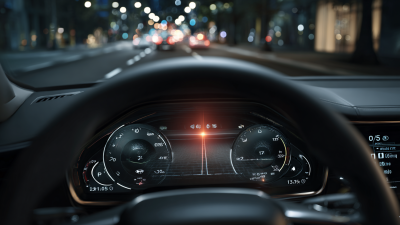
Picking out China’s top Driver Drowsiness Detection system isn’t just about comparing camera specs. You really want a solution that can pick up on those slow blinks, long eyelid closures, yawns, head drops, and even when a driver drifts out of lane repeatedly. Plus, it needs to work reliably whether you're inside a bright cabin, cruising down a dark highway, or driving over bumpy roads that shake the vehicle. And honestly, practical testing is where the real magic happens.
In this guide, we're digging into systems from well-known tech names like Hikvision, Dahua, along with other trusted Chinese manufacturers. We look at infrared camera quality, edge processing capabilities, how quickly alerts are triggered, ease of installation, and whether it fits with Fleet Management Systems. A good system should give clear warnings—think audio alerts, seat vibrations, or dashboard signals—without constantly flashing false alarms. Because at the end of the day, driver comfort is a big deal.
All the evidence needs to come from real-world testing—both controlled trials and actual fleet use. And that means testing under different conditions: night driving, whether the driver is wearing sunglasses or a mask, drivers of different heights, and in all kinds of weather. Security and data privacy are just as important; vendors should be open about how they process, store, and protect the images and data collected. Of course, no system is perfect. Even the fancy software can sometimes get confused—like when a driver is talking or fiddling with the mirror—so honesty about these limitations is crucial.
Ultimately, the best choice really depends on your vehicle type, operating hours, budget, and support needs. For example, long-haul trucks might need more advanced fatigue detection than a city bus. Smaller fleets often prefer something simple to install and easy to support. We’re focusing on systems that show real results—performance you can measure, knowledgeable deployment, and transparent info from providers. That way, you can really tell if a product will perform in the real world, not just in a demo. Because let’s face it, roads don’t give you a second chance."
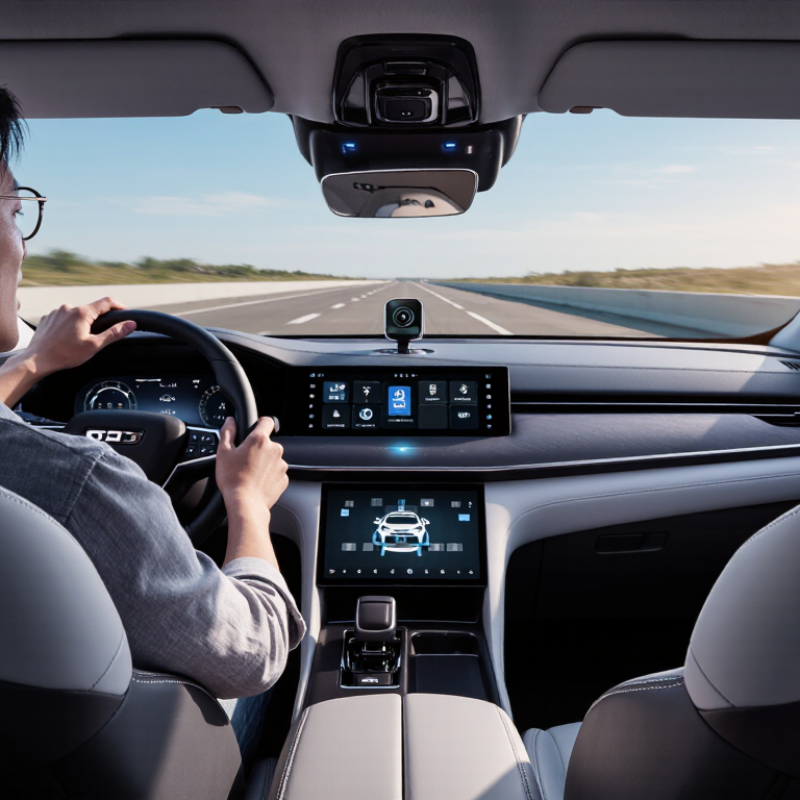
A Driver Drowsiness Detection System identifies reduced alertness before a driver loses control. It may analyze eyelid closure, slow blinking, head nodding, steering changes, and lane movement. Some systems also measure facial direction or driving time. The purpose is not to judge the driver. It is to provide an early warning, such as an audible alert, seat vibration, or dashboard message. In a dark cabin, even a brief three-second eye closure can matter.
The safety need is substantial. The National Highway Traffic Safety Administration reported 684 deaths involving drowsy driving in 2021. However, NHTSA notes that these crashes are difficult to identify accurately. The AAA Foundation for Traffic Safety estimated that drowsy driving contributed to about 328,000 crashes annually in its widely cited research. These figures show why detection should support prevention, not replace responsible rest. A reliable system must work with different faces, glasses, lighting conditions, and road markings. No sensor is perfect. False alarms can also make drivers ignore future warnings, which deserves honest review.
Tips: Choose a system that combines facial and vehicle-behavior signals. Keep the camera clean and correctly positioned. Treat every alert seriously, then stop safely when fatigue continues. Calibration matters.
Reduced sleep is associated with a higher risk of a motor-vehicle crash. A driver Drowsiness Detection system uses signals such as steering behavior, lane position, eyelid movement, and head posture to identify reduced alertness and issue warnings before the driver loses control. The chart shows estimated relative crash risk compared with drivers who slept at least 7 hours in the previous 24 hours.
Source: AAA Foundation for Traffic Safety, “Acute Sleep Deprivation and Risk of Motor Vehicle Crash Involvement,” 2016. Values represent estimated relative crash risk.
China Best Driver Drowsiness Detection System?
How Driver Drowsiness Detection Technology Works
A driver drowsiness detection system observes visible changes in driving behavior and facial movement. An inward-facing camera tracks eyelid closure, blink frequency, gaze direction, and head position. It may also measure how long the eyes remain closed. This period is often called PERCLOS, a recognized fatigue indicator. The cabin grows quiet. A driver may stare forward while reacting slowly, so eye tracking alone cannot prove alertness.
Real Time Driver Drowsiness Detection combines camera data with steering input, lane movement, speed changes, and trip duration. Software compares these signals with an individual’s normal driving pattern. If several warning signs appear together, the system can issue a clear audio or visual alert. Some systems process data locally, which can reduce transmission risks and improve response speed. In practical testing, engineers should examine night scenes, glasses, shadows, and uneven roads. False alarms matter. They may distract drivers and reduce trust in the technology.
No detection method is perfect. A tired driver can sometimes appear attentive, while a focused driver may blink unusually often. I would treat the alert as support, not a medical judgment or permission to continue driving. Reliable deployment requires careful calibration, transparent testing, secure data handling, and regular maintenance. Real road conditions are messy, and laboratory results may not fully reflect them.
| Technology Dimension | How It Works | Typical Measured Data | Strengths | Key Limitations |
|---|---|---|---|---|
| Camera-Based Monitoring | An infrared or visible-light camera observes the driver’s face and uses computer vision to track eye, eyelid, head, and mouth movements. | Eye closure duration, blink frequency, gaze direction, head angle, yawning frequency, and face presence. | Non-contact operation; can provide continuous monitoring and explain why an alert was triggered. | Performance may decline when the face is blocked by sunglasses, masks, hands, poor camera placement, or extreme lighting. |
| PERCLOS Analysis | The system calculates the proportion of a defined observation period during which the driver’s eyes are substantially closed. | Percentage of time with eyes at least approximately 80% closed during a time window; the exact threshold varies by implementation. | A well-established behavioral indicator associated with reduced alertness. | It is an indirect measure and should be combined with other signals because normal blinking, squinting, and visual tasks can affect results. |
| Facial Landmark Tracking | Algorithms identify key points around the eyes, eyebrows, nose, lips, and jaw to estimate facial movement over time. | Eye aspect ratio, mouth opening, eyelid distance, facial orientation, and landmark confidence. | Supports several fatigue indicators using a single camera stream. | Accuracy depends on face visibility, camera resolution, processing quality, and individual facial characteristics. |
| Head-Position Analysis | The system estimates whether the driver’s head is repeatedly dropping, tilting, or turning away from the road. | Pitch, yaw, roll, duration of abnormal posture, and frequency of head nodding. | Can detect behaviors that may occur alongside prolonged eye closure. | A driver may naturally turn the head, check mirrors, or look at the dashboard, creating possible false alerts. |
| Steering-Behavior Monitoring | Vehicle sensors analyze steering corrections and lane-position changes that may indicate reduced attention or fatigue. | Steering reversal rate, correction amplitude, lane deviation, lateral position, and time-to-line-crossing. | Uses vehicle dynamics and can work when the driver’s face is not visible. | Road curvature, wind, road markings, vehicle type, and driving style can influence the measurements. |
| Lane-Departure Assessment | A forward-facing camera or vehicle sensor estimates lane boundaries and compares the vehicle’s path with those boundaries. | Lane offset, departure frequency, lateral velocity, and duration outside the lane center. | Provides an additional behavioral signal related to loss of lane control. | Requires sufficiently visible lane markings and may be unreliable in construction zones, snow, rain, or sharp curves. |
| Physiological Sensing | Wearable or contact-based sensors estimate physiological changes associated with fatigue and reduced alertness. | Heart rate, heart-rate variability, skin conductance, and, in specialized systems, brain or muscle activity. | Can detect internal physiological changes that may not yet be visible in facial behavior. | Sensors may be uncomfortable, require correct placement, and can be affected by motion, stress, illness, or individual differences. |
| Multimodal Sensor Fusion | Software combines camera, vehicle, and optional physiological signals before calculating a fatigue-risk score. | Weighted risk score, confidence level, event duration, and repeated-alert count. | Generally improves robustness by reducing dependence on a single measurement. | Higher hardware, integration, calibration, privacy, and maintenance requirements. |
| Alert Mechanism | When fatigue indicators exceed configured criteria, the system gives a staged warning to regain the driver’s attention. | Visual icon, audible tone, voice prompt, seat or steering vibration, and escalation level. | Provides immediate feedback without requiring the driver to interpret raw sensor data. | Alerts cannot replace rest, safe driving practices, or human judgment; excessive alerts may cause warning fatigue. |
| Low-Light Capability | Infrared illumination or low-light image processing helps the camera observe facial features during nighttime driving. | Face-detection confidence, eye visibility, image brightness, and tracking continuity. | Supports continuous monitoring in dark cabins and changing ambient light. | Strong reflections, blocked lenses, tinted eyewear, and poor installation can still reduce reliability. |
| System Response Time | The system processes sensor data continuously and triggers an alert after a configured persistence period or risk threshold. | Frame-processing rate, detection latency, event persistence, and alert escalation delay. | Fast processing can provide earlier warnings during an emerging fatigue event. | Very short thresholds may increase false positives, while long thresholds may delay intervention. |
| Evaluation Criteria | A practical assessment should consider detection accuracy, false-alert rate, missed-event rate, usability, privacy, environmental performance, and vehicle integration. | Sensitivity, specificity, precision, recall, latency, uptime, calibration stability, and driver acceptance. | Creates a balanced basis for comparing systems instead of relying on a single advertised specification. | Results can vary by driver population, road conditions, camera placement, test protocol, and definition of a fatigue event. |
Note: Driver drowsiness detection is an assistance technology. It should supplement, not replace, adequate sleep, regular breaks, and safe driving decisions.
China’s driver-monitoring systems increasingly combine infrared cameras, steering sensors, and vehicle-motion data. The core Driver Drowsiness Detection Sensor often uses near-infrared imaging to track slow blinks, prolonged eyelid closure, yawning, and head movement at night. Computer vision can calculate PERCLOS, the percentage of time eyes remain mostly closed. Research commonly treats elevated PERCLOS as a strong fatigue indicator, although it is not a perfect diagnosis.
The International Transport Forum reports that fatigue contributes to a significant share of serious road crashes, while the U.S. National Highway Traffic Safety Administration recorded 684 drowsy-driving deaths in 2021. These figures show why Chinese fleets need layered detection rather than one warning signal. Steering-wheel corrections can reveal drifting attention. Lane-position changes can add context. Some advanced systems also assess heart-rate variation through contactless sensing, but motion and clothing can reduce accuracy. Real-world testing remains difficult. A driver may blink slowly after dust enters the cabin. A camera may misread sunglasses or a lowered head. Calibration deserves more attention.
Tips: Choose infrared illumination for dark cabins. Combine eye, face, and vehicle signals. Set warnings in stages, starting with a clear visual alert and then a voice prompt. Test the system on buses, trucks, and private cars. Review false alarms weekly. A system that interrupts alert drivers too often may be ignored when fatigue is genuine.
Choosing the best system in China requires more than comparing detection percentages. Real driving conditions matter. A reliable evaluation should include night roads, tunnels, rain, glare, masks, and different driver positions. Test the camera beside the steering wheel and behind the windshield. Small installation changes can affect performance.
OEM Driver Drowsiness Detection should identify slow blinking, prolonged eye closure, head drops, and repeated yawning. It should also separate fatigue from normal behaviors, such as checking mirrors or speaking. Ask for independently verified test data, not only laboratory results. Measure alert latency, false alarms, image stability, and performance across vehicle types. A ten-second delay can be dangerous. Frequent false alerts can make drivers ignore the system.
Data handling deserves equal attention. Confirm how video is stored, who can access it, and whether sensitive footage can be deleted securely. Check compatibility with fleet platforms, vehicle displays, and existing warning devices. Technical support should provide installation guidance, calibration records, software updates, and clear failure reports. Request a pilot with several vehicles and different shift patterns. One week is not enough. I would also review difficult cases manually, because a clean dashboard score may hide poor behavior in real traffic. Some evaluation methods remain imperfect. That is worth admitting.
Major Applications in Commercial and Passenger Vehicles
Driver drowsiness detection is becoming practical in commercial and passenger vehicles. The need is measurable. NHTSA reported 693 deaths involving drowsy driving in the United States during 2023. A European Commission review also links fatigue to roughly 10–20% of road crashes.
NHTSA reported 693 deaths involving drowsy driving in the United States during 2023.
In commercial fleets, in-cabin cameras monitor eyelid closure, gaze direction, head position, and steering behavior. When risk rises, the system can issue a seat vibration, audible alert, or dashboard warning. Fleet supervisors may receive event data for safer scheduling and driver coaching. A truck moving at highway speed covers about 27 meters every second. A delayed warning matters.
Passenger vehicles use similar functions, but the application is more personal. The system can recommend a rest stop, adjust warning intensity, or combine facial signals with lane movement. The European Union’s General Safety Regulation requires driver drowsiness warning systems in newly approved vehicle types from July 2024. This supports wider adoption.
Technology is not perfect. Sunglasses, masks, poor lighting, and unusual seating positions can reduce accuracy. A driver may also ignore repeated alerts. That remains a human problem. Real-world testing should include night driving, long-haul routes, road vibration, and different facial features. Detection should support attention, not pretend to replace sleep, training, or responsible fleet management.
China Best Driver Drowsiness Detection System?
Installation quality often decides whether a drowsiness system helps or distracts. Mount the camera near eye level, with a clear view of the driver’s face. Avoid steering-wheel shadows, reflective glass, and direct sunlight. During a pilot, test night shifts, masks, glasses, vibration, and different driver heights. NHTSA reported 684 drowsy-driving fatalities in 2021, while also warning that these crashes are underreported. A weak installation may worsen that blind spot.
Maintenance needs a written routine. Clean the lens weekly in dusty vehicles. Check alignment after windshield replacement or dashboard repairs. Review false alerts every month, not only system uptime. An alert that sounds during normal blinking can create alarm fatigue. That is a real operational risk. Keep firmware updates controlled, documented, and reversible. The tempting shortcut is automatic updating, but it can disrupt a fleet during peak hours. Small mistakes matter.
Data privacy requires equal attention. Prefer edge processing when practical, so facial video does not leave the vehicle unnecessarily. Store event clips only for a defined period, then delete them securely. Limit access by role, encrypt transfers, and record every retrieval. ISO/IEC 27001 guidance supports risk-based information security controls, while NIST’s Privacy Framework emphasizes identifying and managing privacy risks. Drivers should receive clear notices about collection, purpose, retention, and review rights. A privacy assessment before deployment is sensible. It may feel slow, but repairing trust later is harder.
It monitors signs of reduced alertness before the driver loses control. It may track blinking, eyelid closure, head nodding, steering, and lane movement. Its purpose is an early warning, not judgment.
An inward-facing camera observes eyelids, gaze direction, facial movement, and head position. Software may calculate PERCLOS, measuring how long the eyes remain mostly closed. Steering changes, speed variation, and trip duration add useful context.
Eye tracking alone cannot prove alertness. Dust may cause slow blinking, while sunglasses can confuse the camera. Combining facial and vehicle behavior usually creates a more reliable warning.
The system may produce an audible alert, dashboard message, voice prompt, or seat vibration. A staged warning can begin quietly and become clearer if fatigue continues. Short alerts are easier to notice.
Near-infrared cameras can help monitor faces during nighttime driving. They may detect prolonged eye closure and head movement in low light. Still, shadows, incorrect camera placement, and reflections can reduce accuracy.
No sensor is perfect. A tired driver may appear attentive, while an alert driver may blink unusually often. False alarms can weaken trust, so testing and weekly review are important.
Treat the alert seriously. If fatigue continues, reduce risk by stopping safely and resting. Do not treat the system as permission to keep driving while exhausted.
Keep the camera clean and correctly positioned. Calibrate the system for different faces, glasses, lighting, and road markings. Test buses, trucks, and private cars. Real roads remain messy.
Driver Drowsiness Detection systems are designed to identify signs of driver fatigue and provide timely warnings before reduced alertness leads to an accident. These systems may analyze facial features, eye closure, blinking frequency, head position, steering behavior, lane movement, and driving duration. In China, commonly used detection methods include dashboard cameras, infrared sensors, steering-wheel monitoring, and vehicle data analysis. By combining several signals, the system can improve detection accuracy in different lighting, weather, and road conditions.
When selecting the best Driver Drowsiness Detection solution, users should consider detection reliability, response speed, false-alarm control, compatibility, ease of installation, maintenance requirements, and performance in commercial and passenger vehicles. These systems are widely applicable to buses, trucks, taxis, logistics fleets, and private cars. Proper calibration, regular equipment checks, secure data storage, limited access, and clear privacy policies are also essential for responsible operation. A suitable system should balance safety, usability, cost, and protection of personal information.