Getting a grip on how drivers behave is pretty much essential if we want to make our roads safer. I mean, Dr. Emily Carter, who’s a real expert in Driver Behavior Analysis at SafeRoad Technologies, puts it simply: "To really cut down on accidents, we’ve gotta understand what’s going on inside drivers’ heads." Her words really highlight how crucial it is to look at what drivers are thinking and how they react behind the wheel.
So, driver behavior analysis isn’t just about watching and collecting data for the sake of it. It’s more like finding patterns—things like speeding or getting distracted—that could be dangerous. By doing this, we can get to the root of why drivers do these risky stuff, and you know what? Sometimes, it’s all about the human side of things—emotions, split-second decisions, you name it.
Of course, tech plays a big part here, but it’s not perfect. It might miss those little emotional cues or decision-making nuances drivers have in real time. That’s where things can go a bit wrong—flawed solutions, bad interventions. So, really, if we want to make a difference, we gotta rethink our approach to understanding driver behavior, considering how complex and human it actually is.

Understanding the Importance of Analyzing Driver Behavior
Understanding driver behavior is crucial for improving road safety. By analyzing how drivers act behind the wheel, we can identify patterns that lead to accidents. This analysis provides valuable insights into risky behaviors like speeding, tailgating, or distracted driving. Different factors contribute to these behaviors, from stress to environmental conditions.
Tips: Regular assessments can highlight areas for improvement. Consider using technology to monitor driving habits. Tools for OEM Driver Behavior Analysis can provide real-time feedback. This feedback can help drivers adjust their habits immediately. Also, encourage open discussions about driving experiences. Sharing stories can create awareness and inspire change.
Recognizing that not every driver is aware of their habits is essential. Many may feel they drive safely, yet still engage in risky behavior. Reflecting on our driving habits can lead to better practices. Training programs can foster safer habits too. Engaging learners in practical scenarios is beneficial. Building a culture of safety starts with awareness and understanding.
Analysis of Driver Behavior for Improved Road Safety
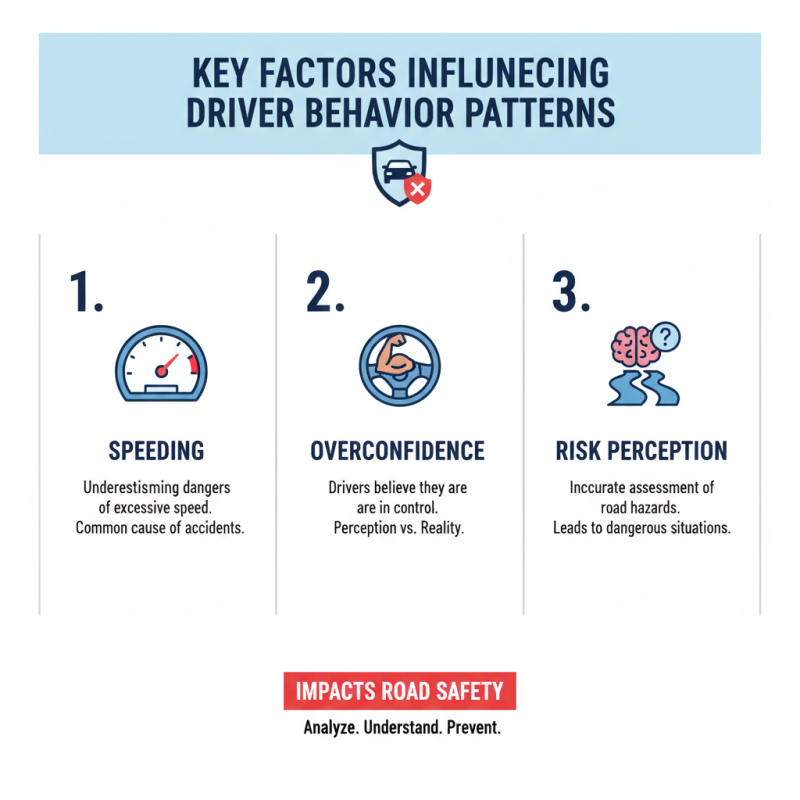
Key Factors Influencing Driver Behavior Patterns
Driver behavior significantly impacts road safety. Analyzing this behavior can reveal key factors that often lead to accidents. Speeding is one such factor. Many drivers tend to underestimate the dangers of excessive speed. They may believe they're in control, but this perception isn't always accurate. Such overconfidence can result in dangerous situations on the road.
Another aspect is distraction. In today's world, distractions abound. Smartphones, navigation systems, and even passengers can divert attention. A momentary lapse in focus can have dire consequences. Additionally, emotional states like anger or frustration can affect decision-making. Aggressive driving often stems from these feelings, further escalating risks on the road.
Understanding these factors is crucial. Engaging in Wholesale Driver Behavior Analysis helps identify underlying patterns. It can reveal tendencies toward risky actions and ineffective responses to road conditions. Reflecting on these behaviors is vital for improvement. Without acknowledging the issues, safer road environments may remain out of reach.
Methods for Collecting Data on Driver Behavior
Collecting data on driver behavior is vital for improving road safety. Various methods can be employed to gather this information. One effective way is through telematics systems. These systems track vehicle movements and driver performance. They provide insights into speed, braking patterns, and acceleration.
Surveys are another method. They allow direct interaction with drivers. However, responses can sometimes be biased. Many drivers may not accurately recall their habits. Implementing observational research is also helpful. Observers can take notes on real-time driving behaviors in various conditions.
Tips: Combine data from different sources for a rounded view. This generates more accurate and actionable insights. Emphasize the importance of anonymity in surveys to increase honesty. Consider using technology, but remember it has limitations.
Data privacy should always be a priority. The data gathered should inform realistic interventions to promote safe driving.
Technological Tools for Analyzing Driver Performance
Driving behavior significantly impacts road safety. Proper analysis of driver performance can help identify risky habits. Advanced technological tools are changing how we assess these behaviors. According to a 2022 report from the National Highway Traffic Safety Administration (NHTSA), around 94% of accidents involve driver errors. This emphasizes the importance of analyzing driver behavior rigorously.
Technological tools such as telematics systems and in-vehicle cameras provide real-time data. These devices monitor acceleration, braking, and cornering. They can also detect distractions. Data collected from these systems is invaluable. It helps create improvement programs tailored to individual needs. An ODM Driver Behavior Analysis can turn observed data into actionable insights. However, data alone isn't enough. Interpretation requires skilled professionals who understand driver psychology.
Tips: Focus on continuous training. Encourage drivers to reflect on their behaviors. Use feedback from technology to make personal adjustments. Employers should foster a culture of safety and improvement. Understanding the limitations of technology is vital. It is essential to balance tech solutions with human insight. Without this, the full potential of analysis might go unnoticed.
Interpreting Data to Identify Risky Driving Behaviors
Understanding driver behavior is crucial for enhancing road safety. Analyzing data can unveil patterns that indicate risky behaviors. For instance, frequent hard braking might suggest tailgating or distracted driving. Such metrics help in identifying drivers who may benefit from additional training. It’s a step towards creating safer roads.
Incorporating technology, like telematics, aids in gathering rich data. This data may reveal trends over time. However, the interpretation of such data can be flawed. Sometimes, it might overlook the context behind certain actions. A driver might brake hard due to abrupt obstacles, not recklessness. Therefore, context is essential.
Engaging with drivers can also enhance understanding. Discussions about their driving experiences offer insights. They may recognize their habits and express concerns. This two-way communication can highlight blind spots in data analysis. Utilizing both data interpretation and personal reflection is key to fostering a culture of safety on the roads.
Implementing Strategies for Improved Road Safety
Analyzing driver behavior is vital for enhancing road safety. Implementing effective strategies can drastically reduce accidents. According to a study by the National Highway Traffic Safety Administration, 94% of serious crashes are due to human error. This statistic underscores the importance of focusing on the driver.
One strategy involves using advanced analytics to track driving habits. Data shows that aggressive behaviors, like speeding and sudden braking, increase crash risks. Programs that monitor these actions can provide timely feedback to drivers. For instance, a project in the UK revealed that targeted feedback reduced aggressive driving by 20%.
Behavioral training is another tool. Research indicates that continuous education on safe driving practices fosters awareness among drivers. However, many programs lack engagement. In a survey, 60% of respondents felt traditional training was ineffective. Therefore, enhancing training methods is crucial. Integrating technology, like mobile apps, could make learning more interactive and fun. Focusing on real-time feedback will likely yield better results.
How to Analyze Driver Behavior for Better Road Safety? - Implementing Strategies for Improved Road Safety
| Behavior Type | Description | Impact on Road Safety | Recommendations |
| Speeding | Driving over the speed limit. | Increases the risk of accidents and severity of crashes. | Implement speed limit enforcement and awareness campaigns. |
| Distracted Driving | Using mobile phones or other distractions while driving. | Significantly increases the likelihood of accidents. | Educate drivers about the dangers of distraction and promote hands-free technology. |
| Aggressive Driving | Tailgating, frequent lane changes, road rage. | Increases the risk of collision and road rage incidents. | Promote calm driving techniques and conflict resolution courses. |
| Driving Under Influence | Operating a vehicle while impaired by alcohol or drugs. | One of the leading causes of fatal accidents. | Implement strict DUI laws and promote designated driver programs. |
| Fatigue | Driving while drowsy or sleepy. | Significantly impairs reaction time and awareness. | Encourage regular breaks during long trips and awareness about sleep health. |
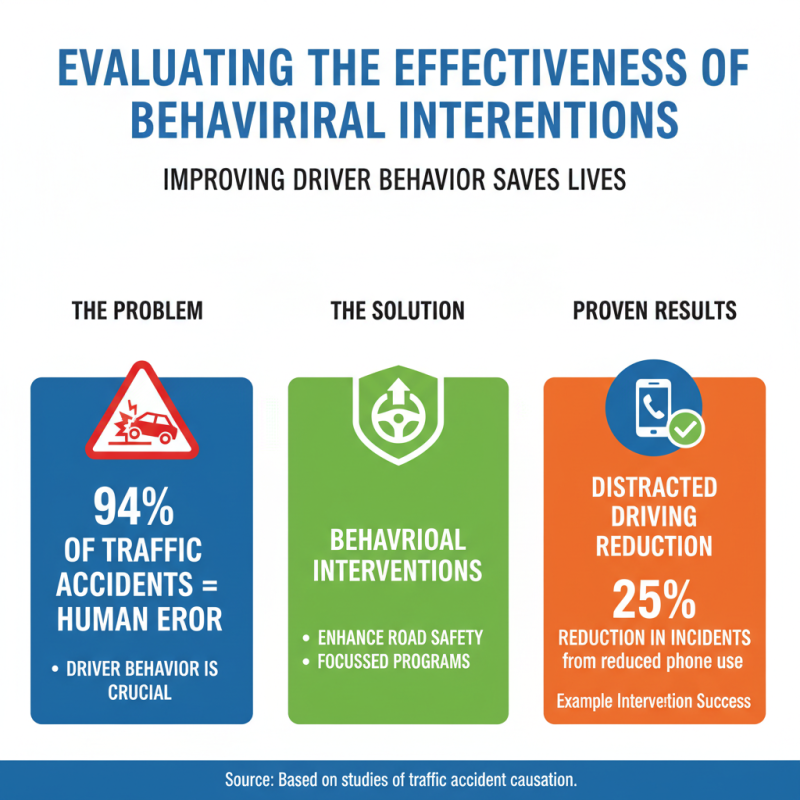
Evaluating the Effectiveness of Behavioral Interventions
Behavioral interventions can significantly enhance road safety. Studies show that 94% of traffic accidents result from human errors. Improving driver behavior is essential. Programs focusing on distracted driving reduction have shown promising results. For instance, an intervention reducing phone use while driving cut incidences by 25%.
Additionally, training programs are gaining traction. One report stated that drivers receiving training improved their scores on assessments by 30%. However, not all drivers fully engage. Some attend programs without genuine intent. This indicates a need for better strategies to motivate participation.
In terms of technology, tools for Driver Behavior Analysis Supplier are evolving. They provide real-time feedback, helping drivers correct unsafe habits. Yet, obstacles remain. Some drivers resist feedback, seeing it as intrusive. Creating a culture that values safety is a challenge. Overall, quantifiable results demonstrate that behavioral interventions can reduce risks on the road but require continual innovation and engagement.
Enhancing Road Safety: The Importance of Driver Fatigue Monitoring Systems in Modern Vehicles
The importance of driver fatigue monitoring systems in modern vehicles cannot be overstated, particularly as road safety continues to be a critical concern globally. According to the National Highway Traffic Safety Administration (NHTSA), drowsy driving is responsible for approximately 100,000 crashes and 800 deaths in the United States each year. These alarming statistics highlight the urgent need for advanced technologies that can identify and mitigate driver fatigue effectively.
Integrating sophisticated driver fatigue monitoring systems can provide significant benefits. Modern systems boast an identification missed rate of 3% or lower, with an equally low wrong rate, ensuring high levels of accuracy in detecting signs of fatigue. Equipped with IP67 ratings and optical distortion correction, these systems can perform effectively in diverse environmental conditions. With effective pixels of at least 1280x720 and central resolutions reaching 720 lines, these systems ensure clarity and precision in image recognition, which is crucial for real-time assessments.
Moreover, these systems utilize a unique combination of 940nm filter glass and infrared lamps, which enhances the accuracy of image recognition under various lighting conditions. They are designed to monitor both facial expressions and driver behavior, providing comprehensive insights into a driver's alertness level. As the automotive industry continues to innovate, the implementation of such technologies not only supports safer driving environments but also represents a critical step towards reducing road traffic accidents caused by driver fatigue.
FAQS
: It significantly impacts road safety by identifying risky habits and reducing driver errors.
Telematics systems and in-vehicle cameras are commonly used to monitor driving activities in real-time.
The data helps create tailored improvement programs for individual drivers’ needs.
Skilled experts are needed to analyze the data and understand driver psychology.
Feedback encourages reflection on their behaviors, leading to personal adjustments and safer driving habits.
A driver's actions may not always indicate reckless behavior; specific circumstances must be considered.
Discussions about their experiences help recognize habits and highlight blind spots in data analysis.
Sometimes, data interpretation can overlook the context behind driving actions, leading to incorrect conclusions.
A culture of safety and continuous improvement through training and open communication.
Balancing technological solutions with human insight to unlock the full potential of driver performance analysis.
Conclusion
Analyzing driver behavior is crucial for enhancing road safety, as it allows for the identification of patterns that contribute to risky driving. Key factors influencing these behaviors include environmental conditions, driver attitudes, and vehicle technology. To effectively conduct Driver Behavior Analysis, it is essential to use a variety of data collection methods such as observational studies, telematics, and surveys, along with advanced technological tools that facilitate performance evaluation.
Interpreting the collected data enables stakeholders to pinpoint hazardous driving actions, leading to the implementation of targeted strategies aimed at reducing accidents. By evaluating the effectiveness of these behavioral interventions, organizations can continuously refine their road safety initiatives, ultimately fostering a safer driving environment for all.

 Front & Rear Parking Assist
 Automatic Parking Assist
 Wade Sensor System
 79GHz Kick Step-on Open System
 79GHz Door Open Warning System
 77GHz Blind Spot Detection
 77GHz Long Range Detection
 60GHz Child Presence Detection
 360 Panoramic Camera
 Driver Fatigue Monitoring System
 Dash Camera
 ADAS Camera
 Streaming Rearview Mirror
 Self Cleaning Camera
 Car Radio
 Infotainment System
 Wireless Charger
 Ultrasonic Sensors System
 4-Image Camera Monitoring System
 Driver Fatigue Monitoring System
 77GHz Blind Spot Detection
 ADAS Camera
 Camera Monitoring System